Hi! I‘m
Arnold Rauers.
Since 2012 I create video games
with various talented people
as Tinytouchtales.

We've made Card Crawl 2, GUNCHO, Geo Gods, Card Crawl Adventure, Gnomitaire, Maze Machina, Miracle Merchant, Card Thief, ENYO and Card Crawl which are available on the App Store and Google Play. I've also released a few games on Steam.
I publish Game-Jam games and showcase my game ideas and prototypes on Itch.io.
If you would like to support my work outside of buying my games, consider becoming a Patron.
You can subscribe to my Newsletter for regular updates and join our Discord community to hang out.
2026-05-25 - Card Crawl 2
First Month of Card Crawl 2
On the 26th of March 2026, exactly 11 years and 6 days after releasing the original Card Crawl back in 2015, we released Card Crawl 2 on iOS and Android. Card Crawl 2 was developed as a true sequel to the original and is my first game that is actually a sequel to any of my other releases, making it somewhat of a new way of making a game for me. We assembled the OG team consisting of Max “Mexer” Fiedler for art and animation, Oliver Salkic in a reduced capacity for music, and I brought on Sam Webster of GUNCHO fame once again for sound design and music.
Development
Card Crawl 2 started out as something of an accident. I originally wanted to create a bigger Card Crawl content update in anticipation of its 10-year anniversary. While brainstorming a new mode I stumbled across the PICO-8 version of Jakub Wasilewski’s new game Solitomb, who I assume took some inspiration from Card Crawl itself to create his own solitaire-style dungeon crawler. After playing his game for a bit I came up with the idea to change Card Crawl’s original design to have a similar stacked dungeon card row above the inventory slots. The new layout closely resembles Gnomitaire’s card layout but keeps the original Card Crawl gameplay loop intact.
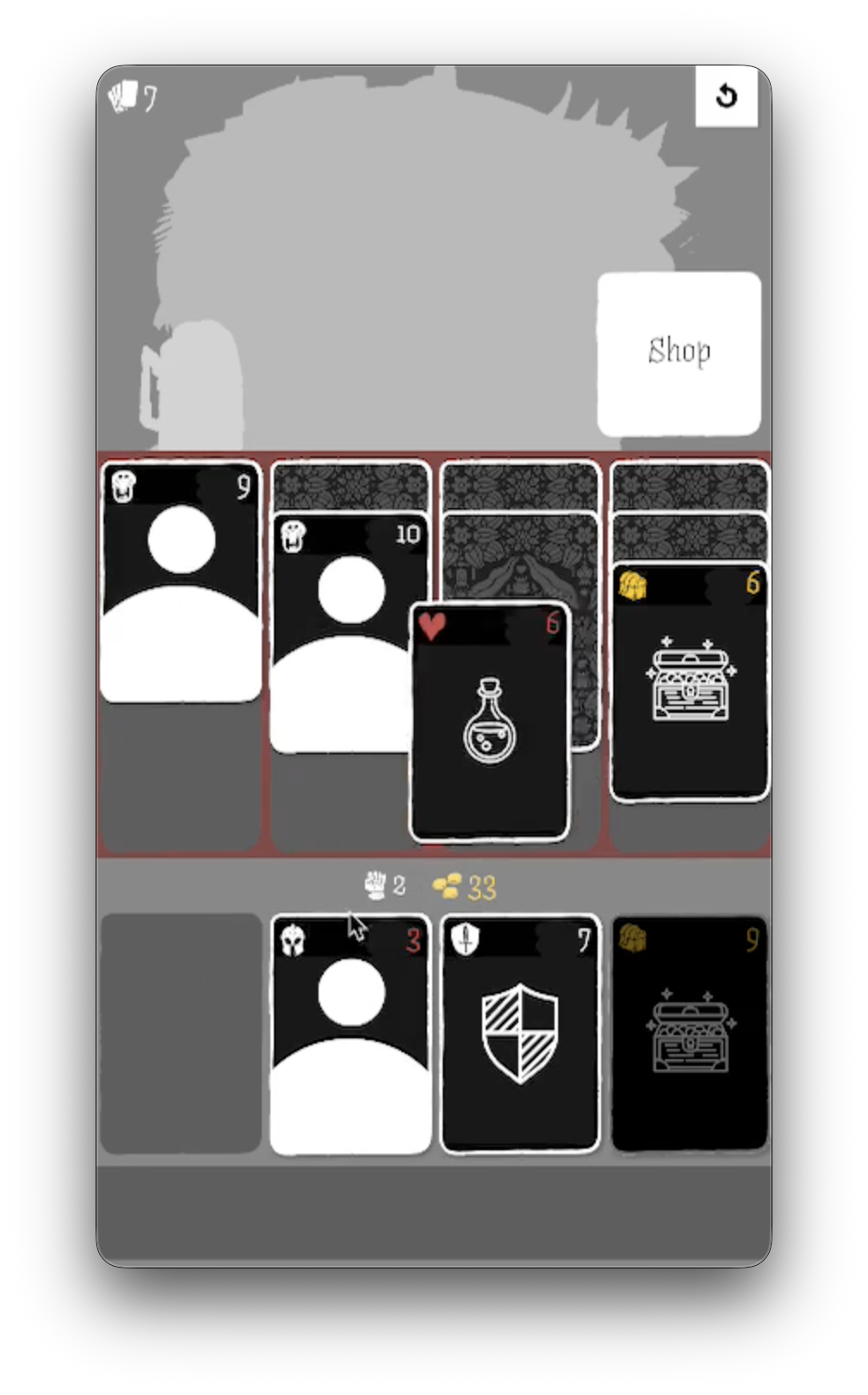
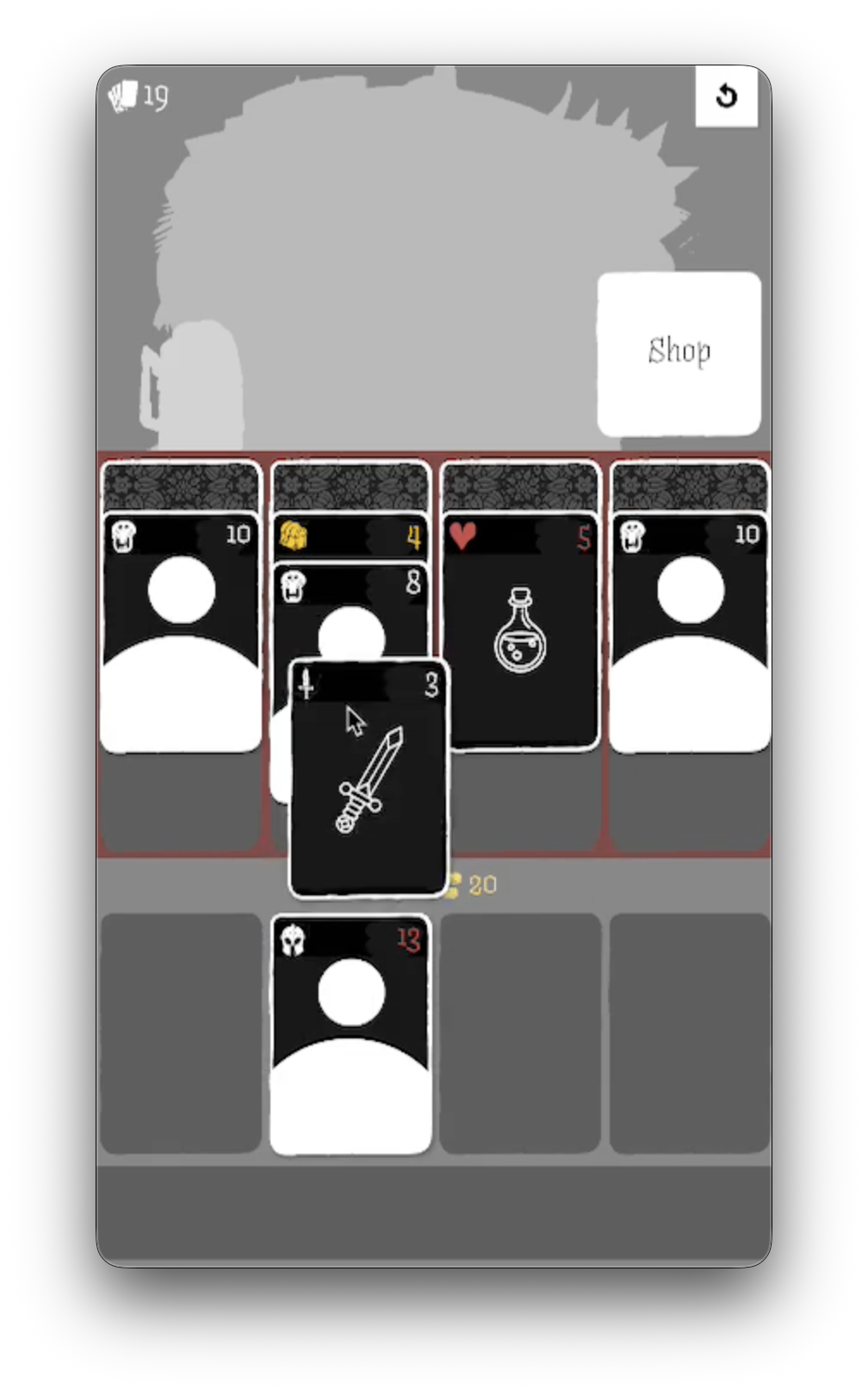
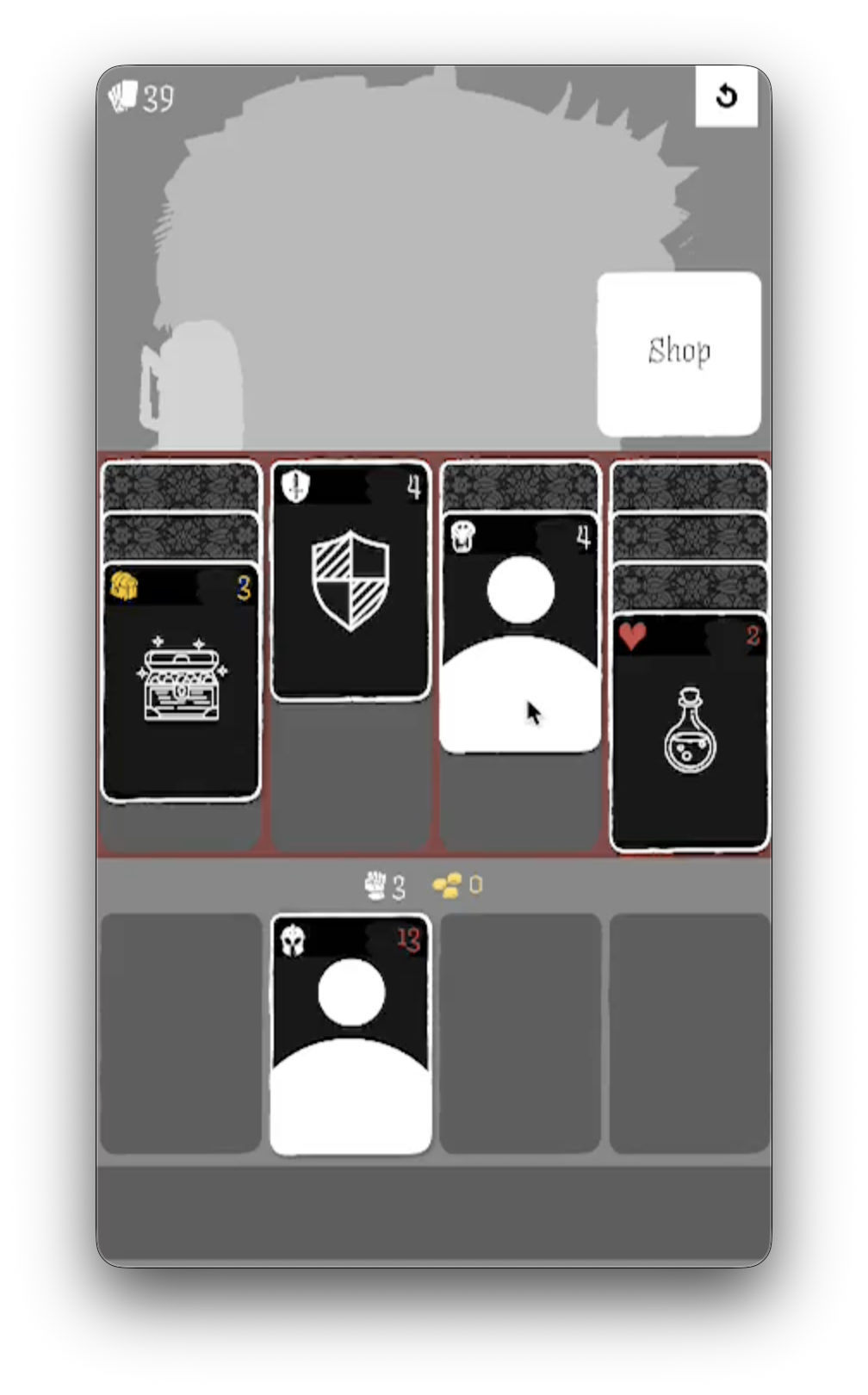
One necessary change I had to make was to replace Card Crawl’s “play 3 cards to advance” mechanic with something that would work with the new column design. Instead of removing 3 cards from the game board, players now have 3 consumable action points they can spend to perform various actions, like attacking, healing, casting a spell, collecting gold, or selling and discarding a card. Once all action points are spent, 4 new cards are dealt from the top behind the already present cards. This leads to an interesting new mechanic where new cards not only appear but actually interact with all other cards on the board, pushing them down towards the player. This specific design opened up lots of new possibilities for gameplay interactions and is something I had been trying to integrate into a card game for quite literally years, as seen in several of my prototypes released on itch.io.
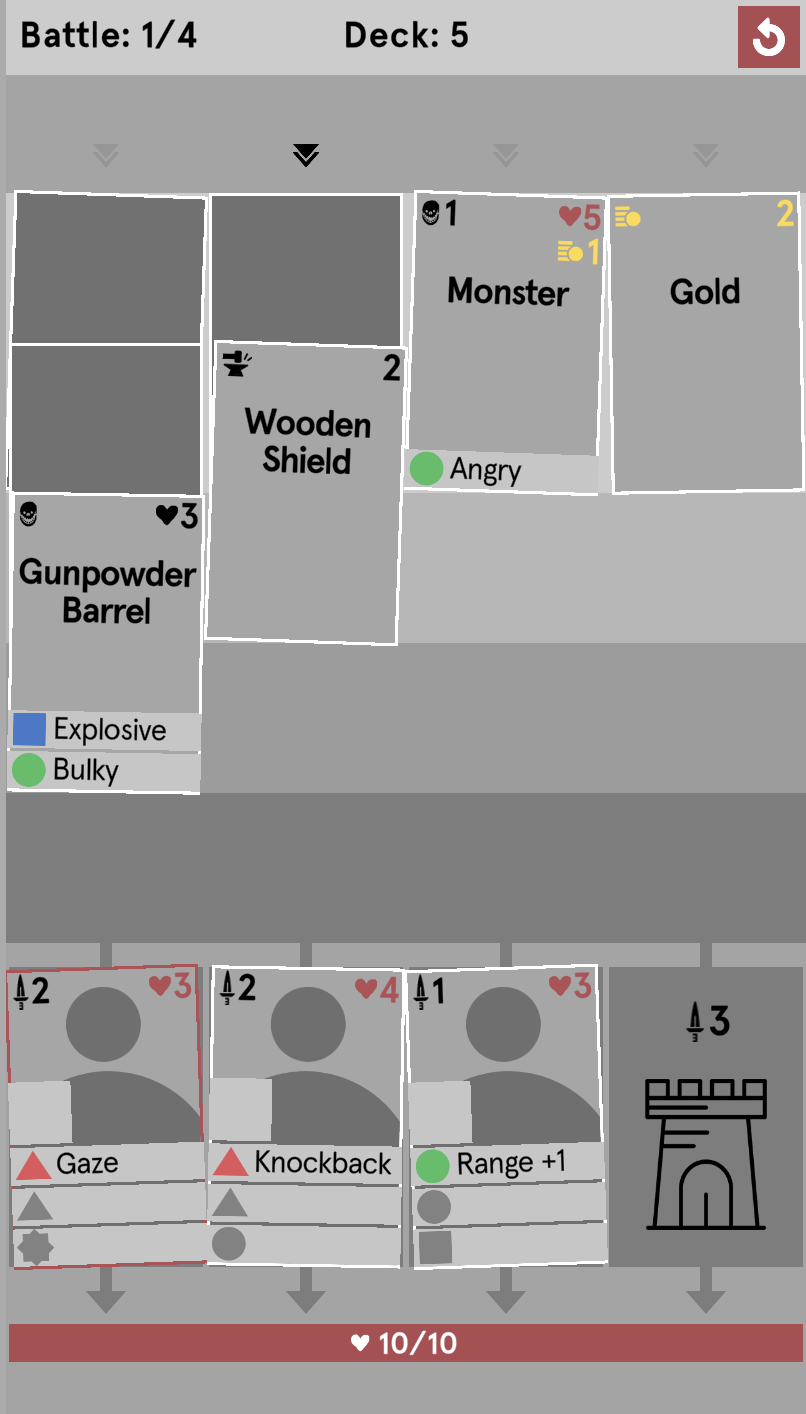
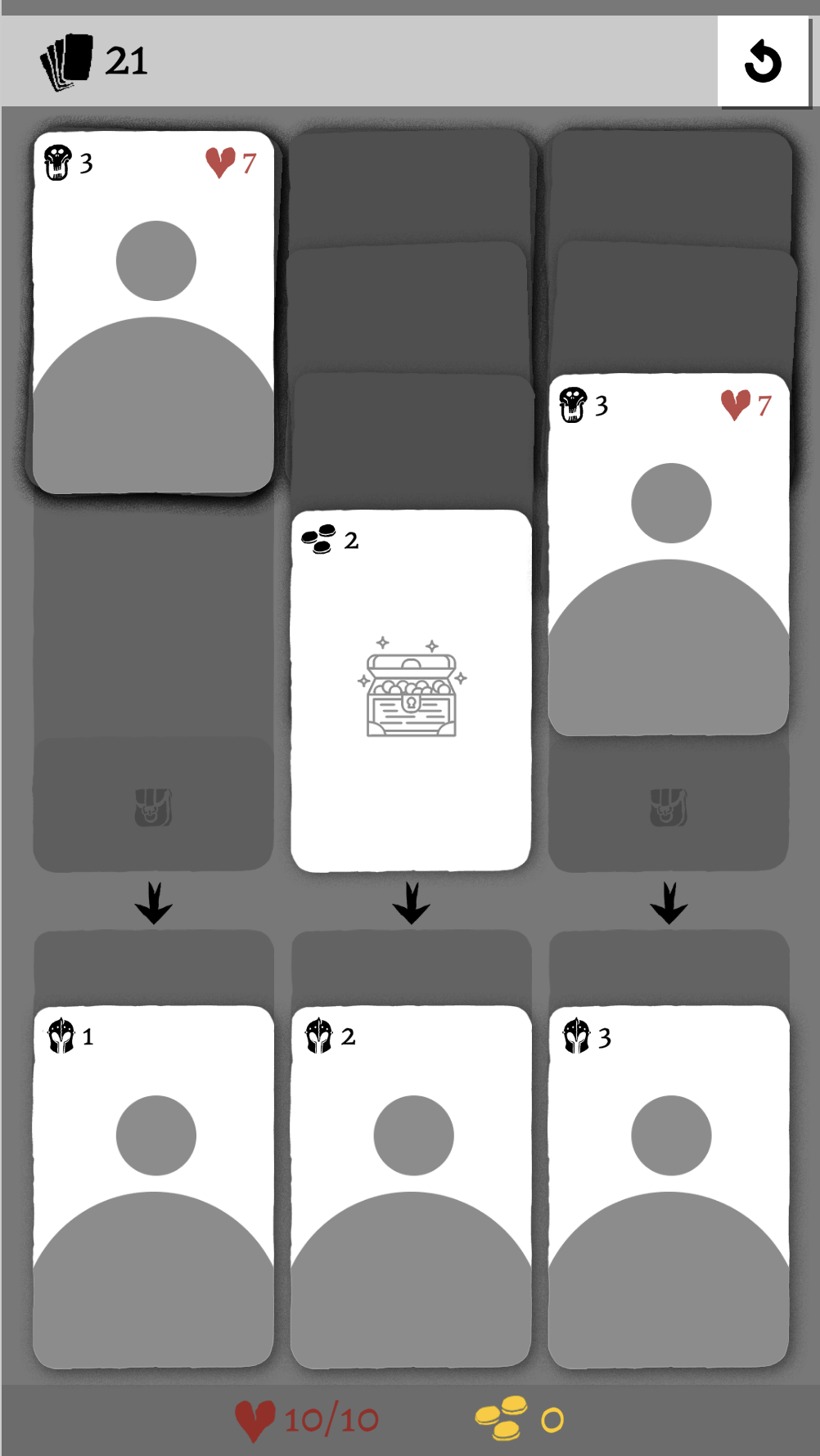
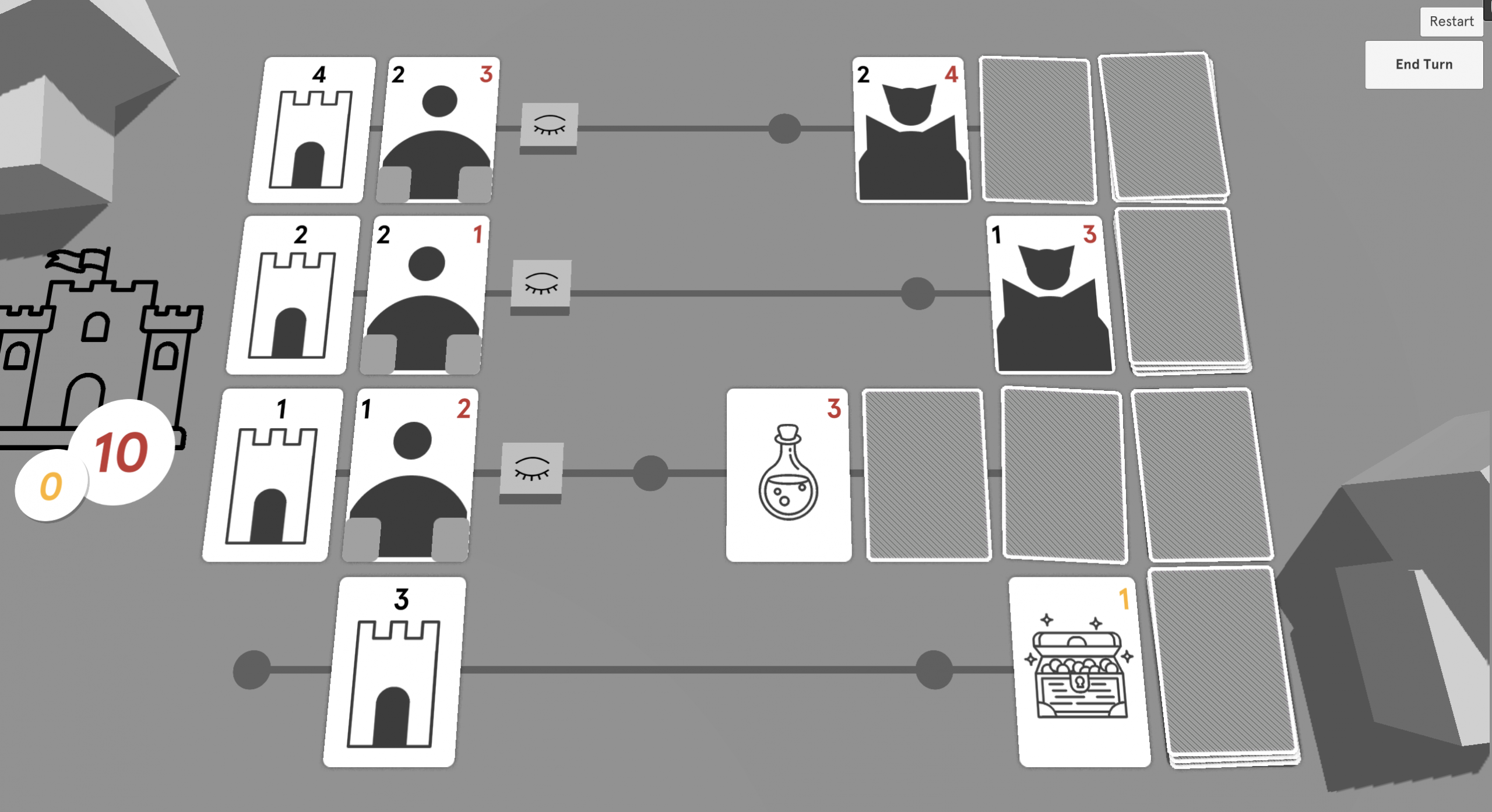
Besides the addition of the new moving column design, we also integrated a new mechanic with the inventory items that sit at the bottom of the screen, providing the player with an additional layer of passive gameplay effects in combination with the already established spell cards. The introduction of inventory items the player can equip also led us to design new hero characters, already established in Card Crawl Adventure, that would start with their own hero cards and items, giving each character a lot of personality and unique strengths and weaknesses.
In general the development went pretty smoothly, since most of the content is some kind of redesign of already proven-to-be-fun mechanics, or the addition of things most deck-builder roguelikes have already proven to work well. Examples include drafting modes, escalating challenges, Slay the Spire-like ascensions, and the famous weekly Tavern Crawl that spans a full week and provides a new community challenge for all players.
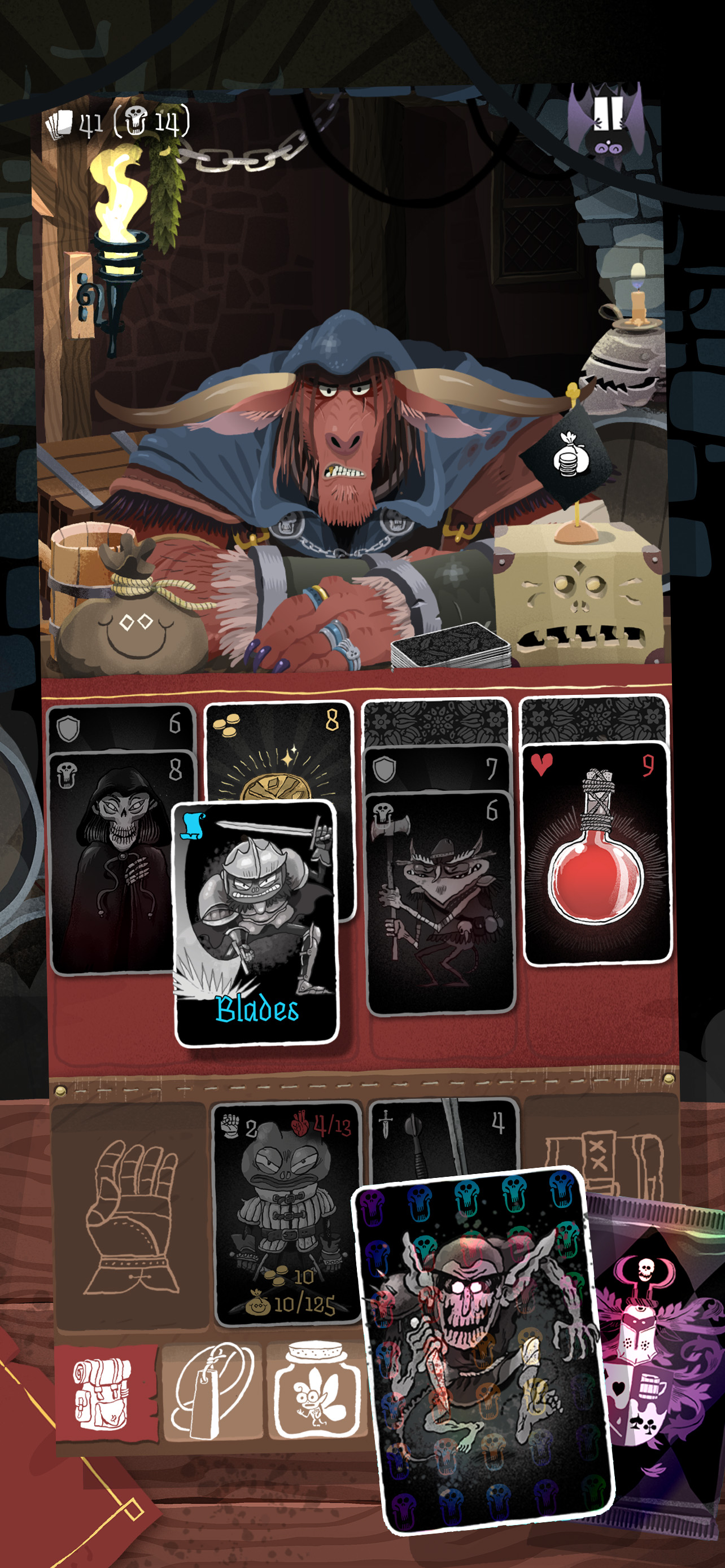
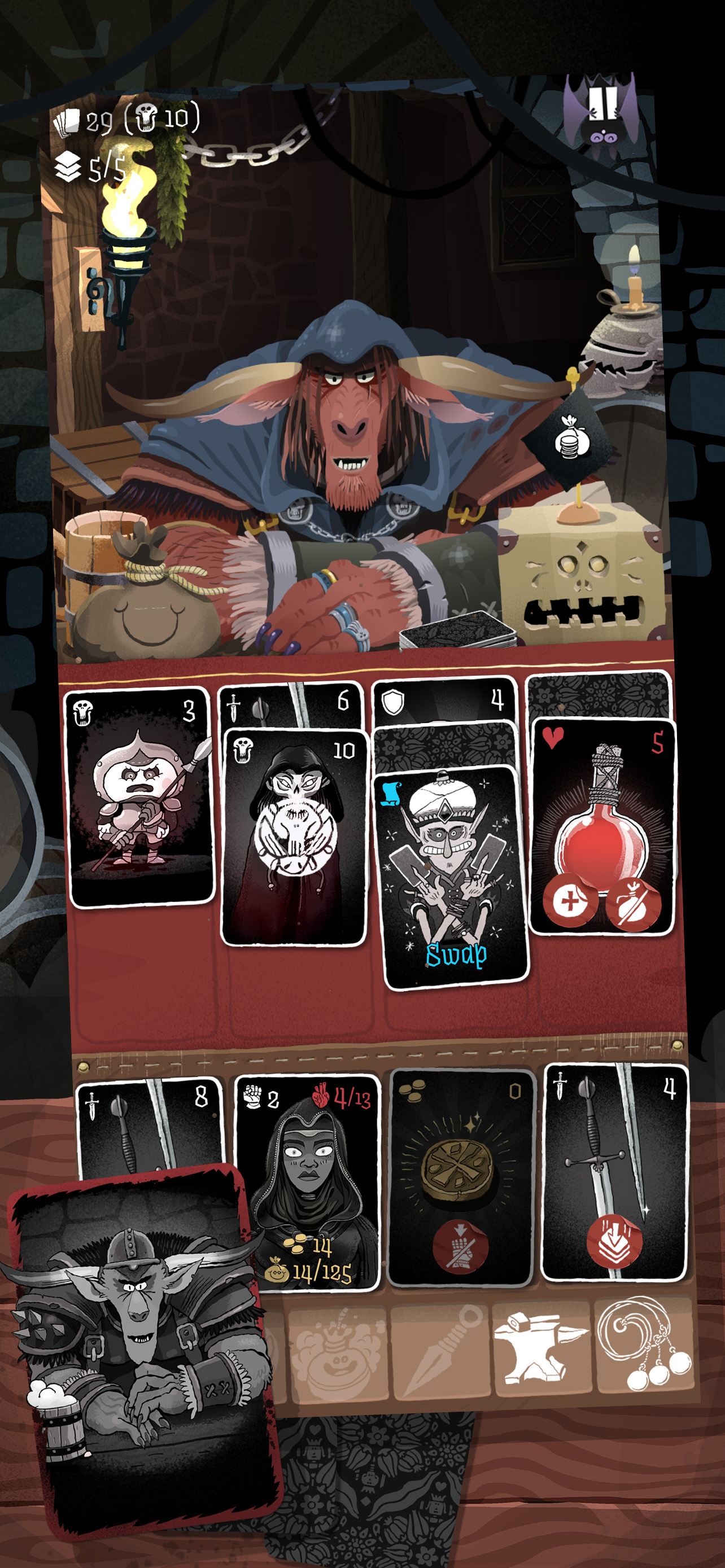
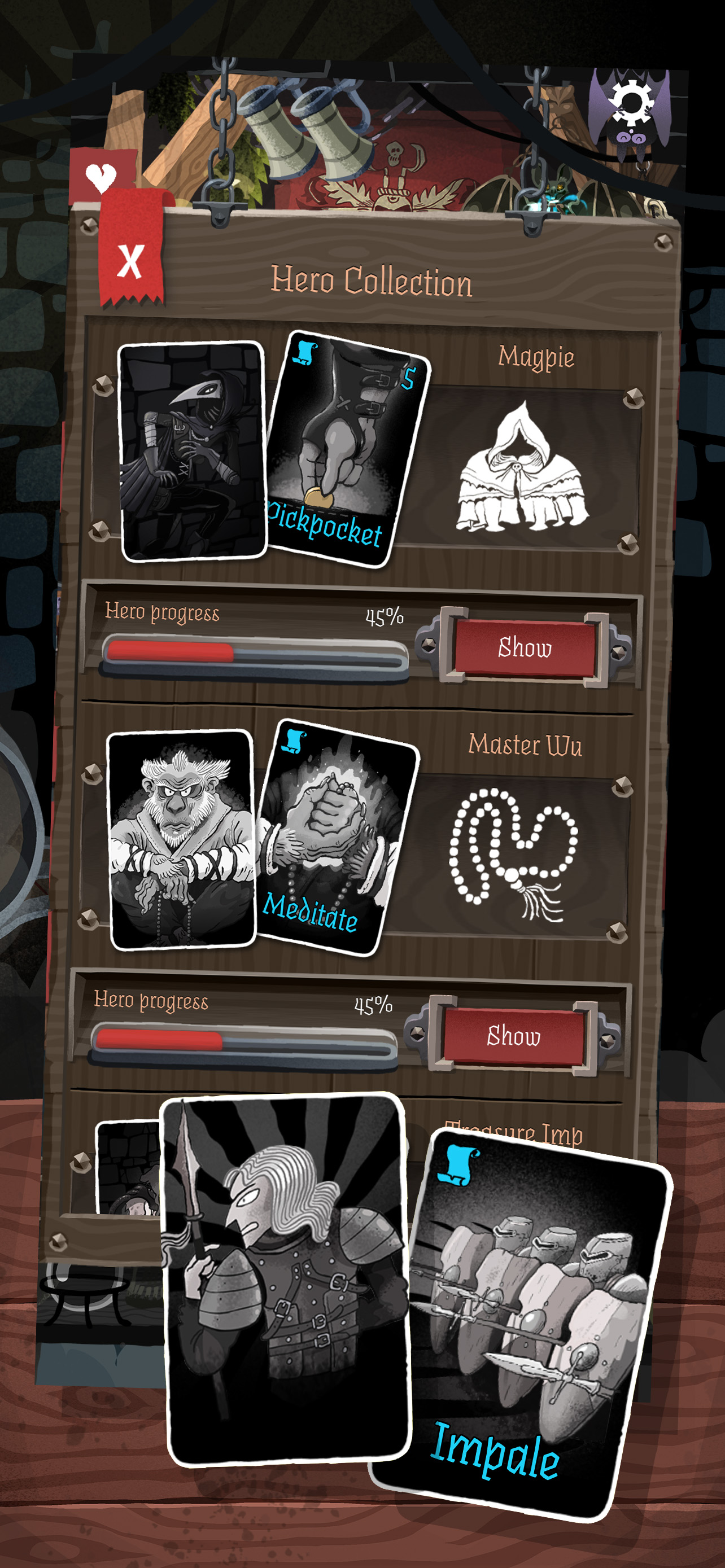
On the art side, we could also reuse plenty of assets from the original and Card Crawl Adventure, combining them into a new, improved experience. On the audio front, Sam did an awesome job creating a new sound landscape, multiple tutorial soundtracks, and breathing new life into the tavern dealers, who still play an important role on the emotional side of the game. There is nothing better than losing on the last turn and having Hoerni or one of his tavern-dweller friends laugh at your demise.
Over the course of about 14 months we created Card Crawl 2 as a worthy successor to my favourite game. The game launched with 50 spell cards, 50 items, 8 unique heroes with unlockable unique sword and shield card art, several unlockable new modes, and a few variations on existing ones. We also introduced variant cards inspired by Balatro’s design, where each spell card can have a Holographic, Polychrome, Golden, Foil, or Negative variant, each adding a new ability on top of the base spell card.
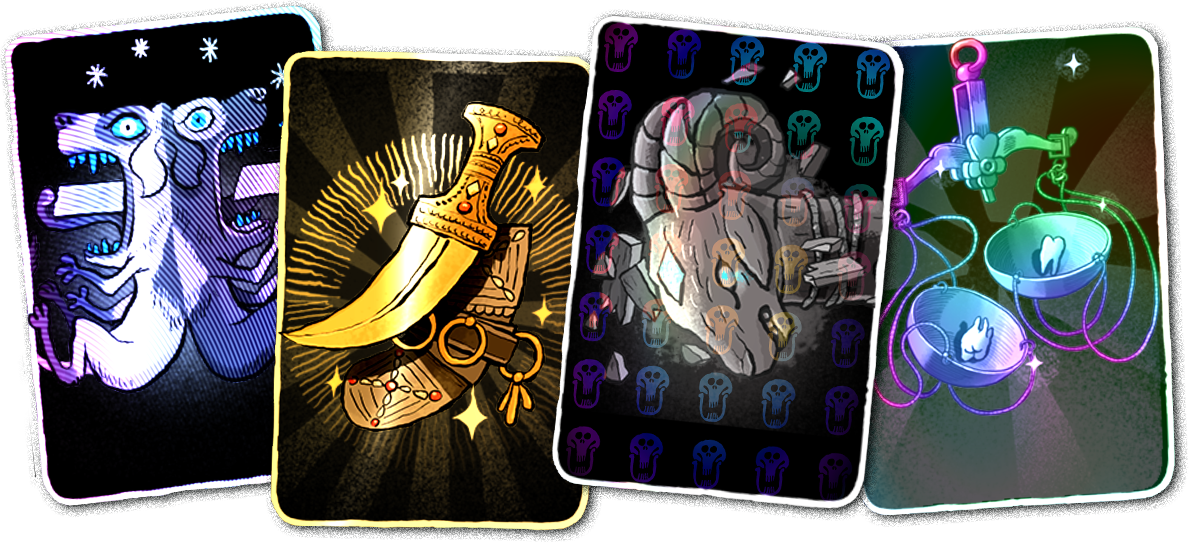
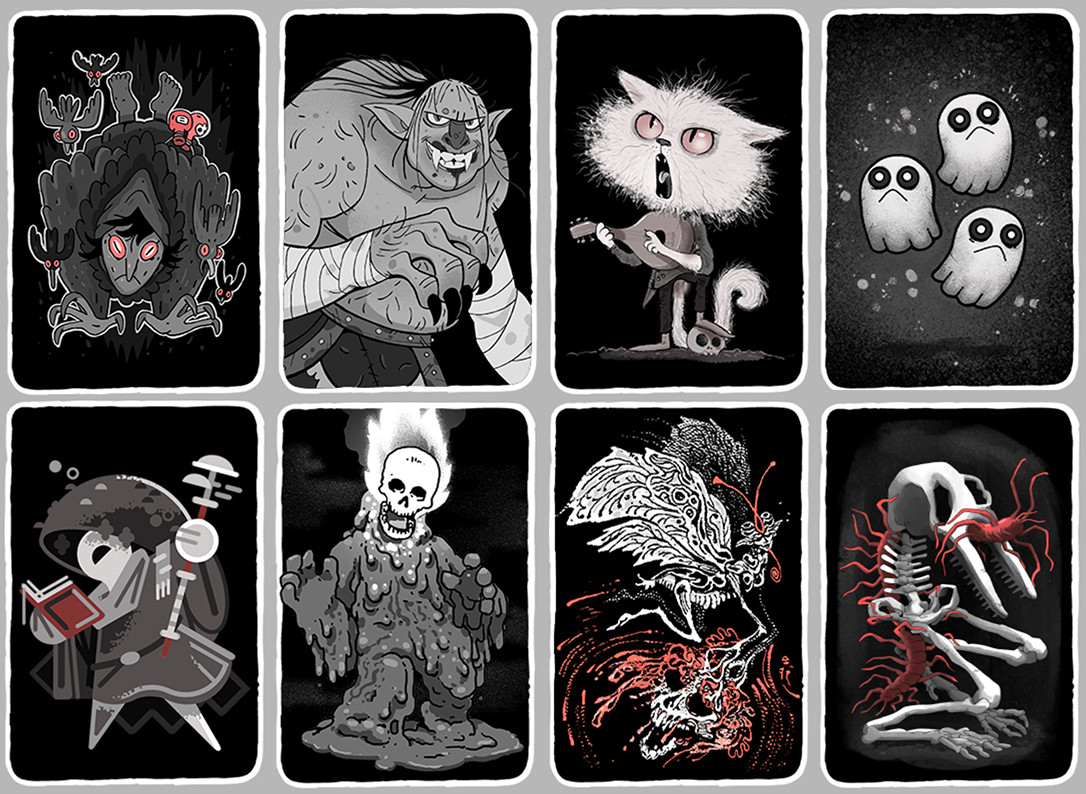
This has also proven to be a great long-term goal for players working to unlock these variants for each spell card. We added daily changing challenges, achievements to unlock new tavern art and tavern dealers, and a new feature called custom monster designs, for which I commissioned an amazing cast of artists who contributed new monster card art sets for players to unlock.
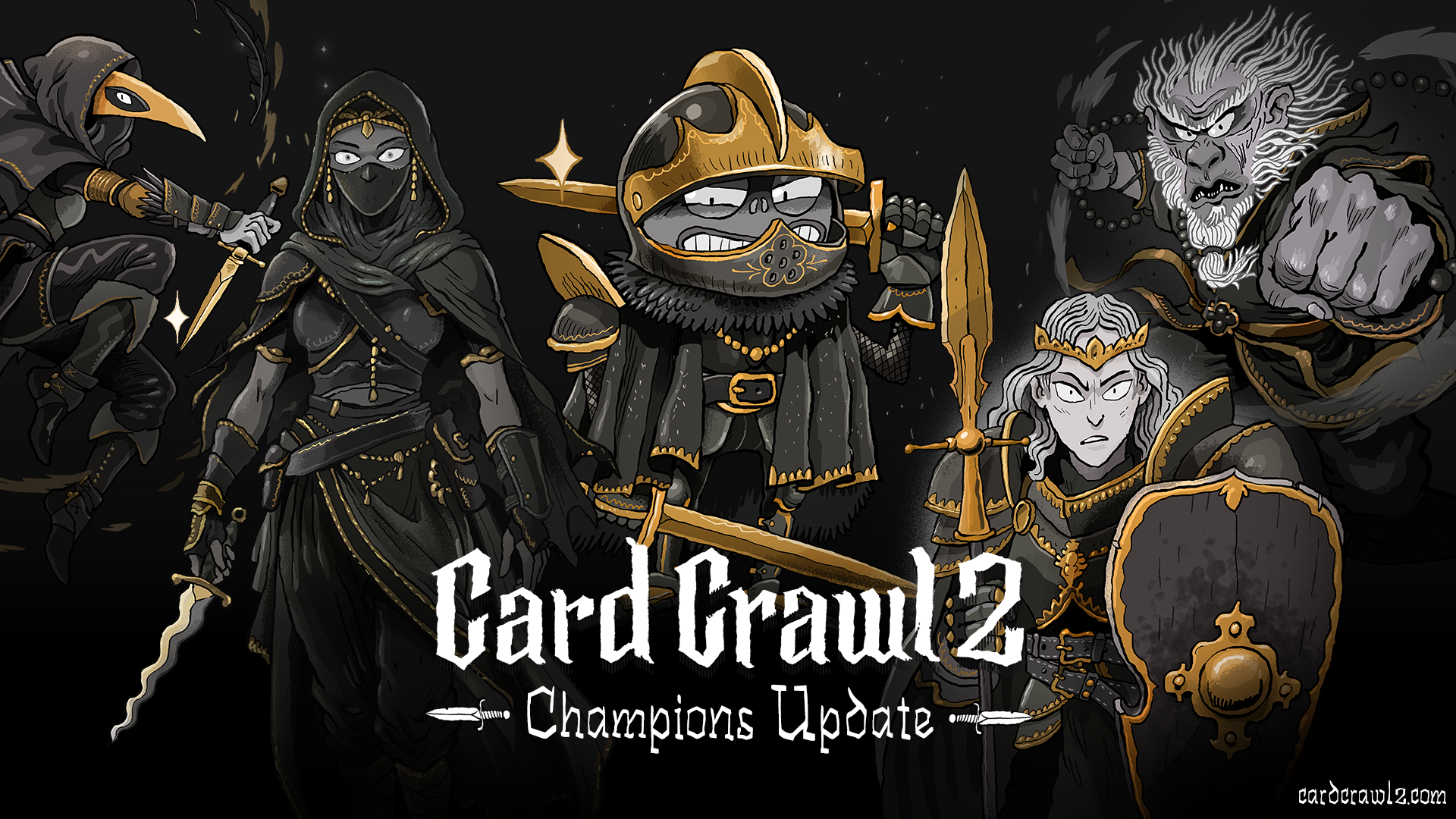
We already released a bigger content update called Champions in May, which added another 10 new spell cards and 8 Hero Champion cards that can be unlocked by mastering several game modes on their hardest difficulty, showcasing the player’s skill in the form of amazingly rendered versions of the base hero cards. In addition to that, I am currently working on 2 new game modes that will enhance the game even further.
Monetization
I wanted to take a short moment to talk about the monetization of the game, which was initially received quite critically by a small part of the fan base.
Traditionally, most of my games are shareware games that come with parts of their content for free but have a single durable in-app purchase to unlock the full game. The free versions of these games are supplemented with rewarded video ads to access locked content and try out parts of the game. Buying the full version removes ads and all gates. For Card Crawl 2 I decided to break from my traditional shareware path and lean more into a true free-to-play approach to monetization. The mobile games landscape has changed quite a lot in recent years, and even though most of my older titles still produce meaningful revenue, I felt that if Card Crawl 2 was to support me over the next 5-plus years I had to design the game’s monetization in a way that offered more meaningful ways to spend money on the game long term, while giving returning users an ongoing incentive to engage by occasionally buying something with real money or using rewarded ads in a more integrated way than just being pushed into unlocking the full version.
I went through several design overhauls of the system, but in the end settled on a two-part approach. Scores earned in the game (gold) are directly transferred into soft currency that can be used in the store, the central place for unlocking content, to get new cards and equipment items. To cap the amount of gold that can be earned through playing, we introduced a gold storage limit in the form of a literal living gold pouch that stores your hard-earned gold and protects it from the barkeeper Gnomi, who wants you to pay your tavern tab at the end of each game. Pouchy stores up to 250 gold in its base version and can be upgraded through 2 durable in-app purchases to store 500 and then 1,500 gold. All unlocks in the game are balanced around this limitation. The second system for earning gold outside of playing is chests. Chests are the central way of earning more gold than Pouchy’s maximum will allow, and also give players different types of rewards including variants, custom monster skins, or a secondary currency called gems, which can be used as an alternative way to purchase hero sets or access otherwise locked parts of the game.
The game was designed so that paying players can unlock all content within a 30-day window if they choose to upgrade Pouchy. Pure free-to-play players can still put in the time and effort and complete 100% of the game without spending any money, granted over a much longer time frame of around 90 days. We also introduced rewarded ads as a means of either progressing faster in the game or receiving rare or more valuable content sooner. All rewarded ads are optional and there is always a meaningful incentive to use them. But if a player is still put off by those optional ads, they can purchase a no-ads subscription. This is where the game received quite a bit of backlash when it was first announced.
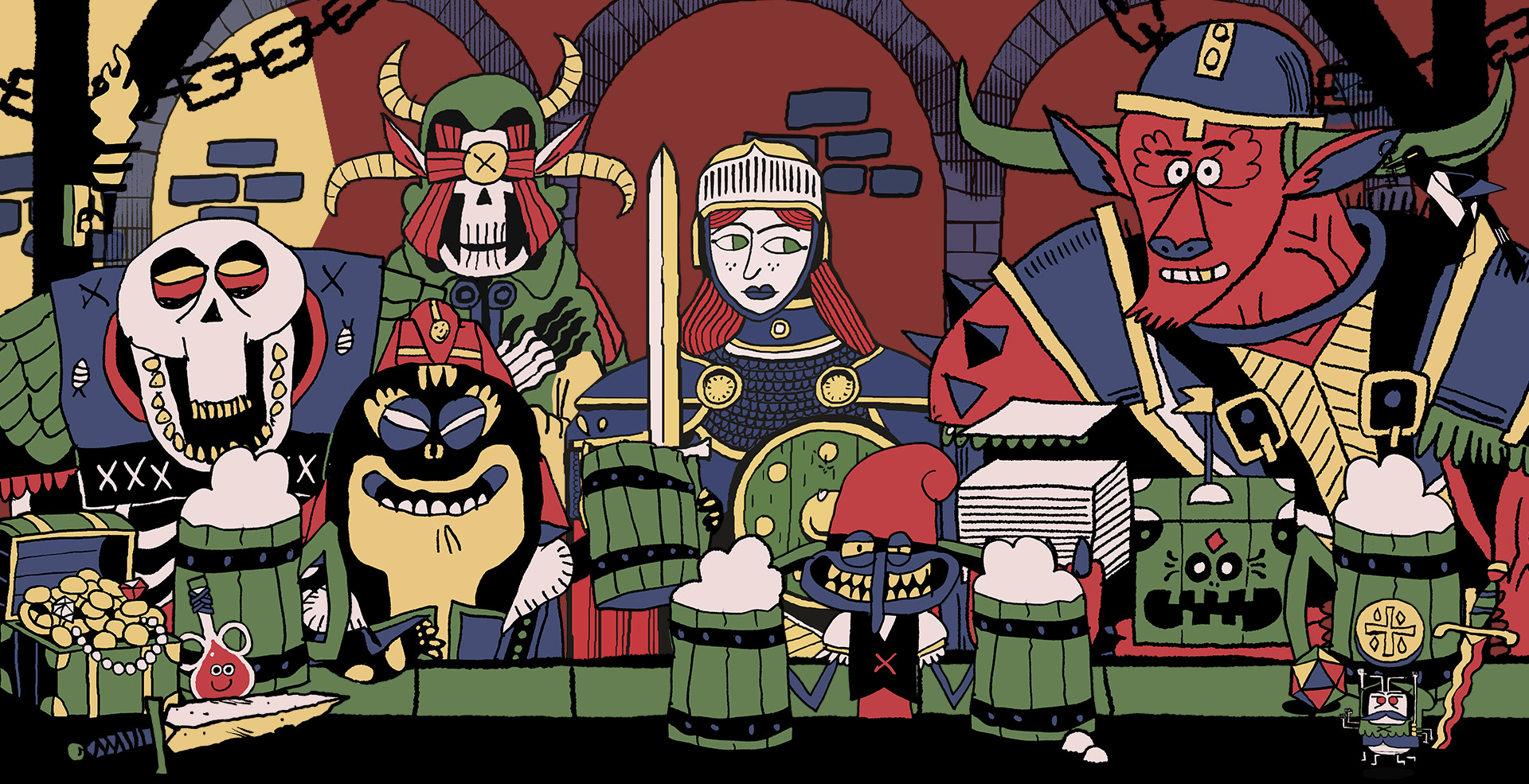
I know that subscriptions in games are pretty much frowned upon by the traditional gaming crowd and carry a pretty bad stigma. But I decided to add a no-ads subscription anyway, because I thought it would be a great way to support the game long term. In hindsight, my biggest mistake was underestimating how this was communicated originally in the game, where the subscription was presented as a pure no-ads offering and did a very poor job of showing what a player actually gains from it. After release we improved the messaging and also lowered the price from $4.99 to $0.99 per month. This made the purchase more reasonable and the communication of its benefits much clearer, and since then most of the negative reviews regarding monetization have been overtaken by players actually enjoying the game for what it is worth.
Featuring
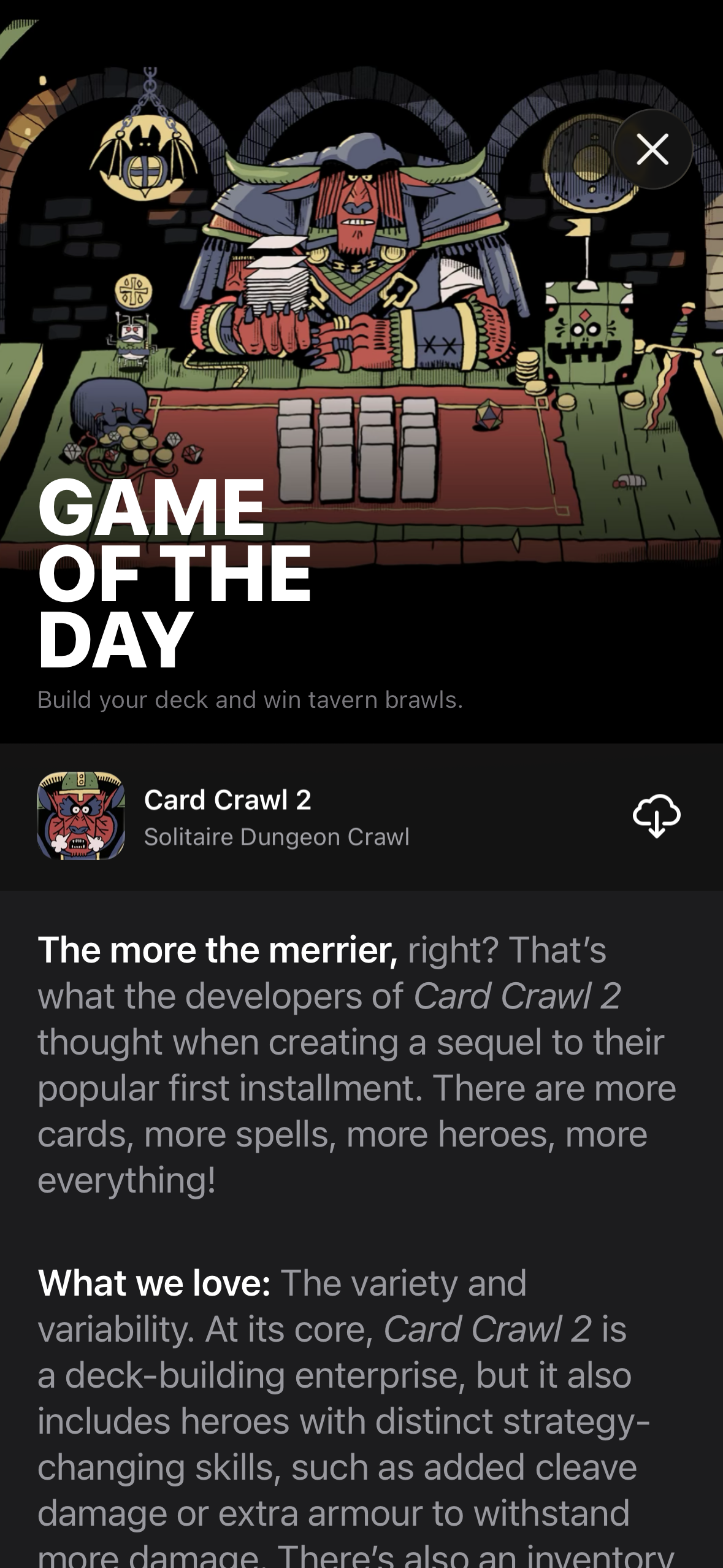
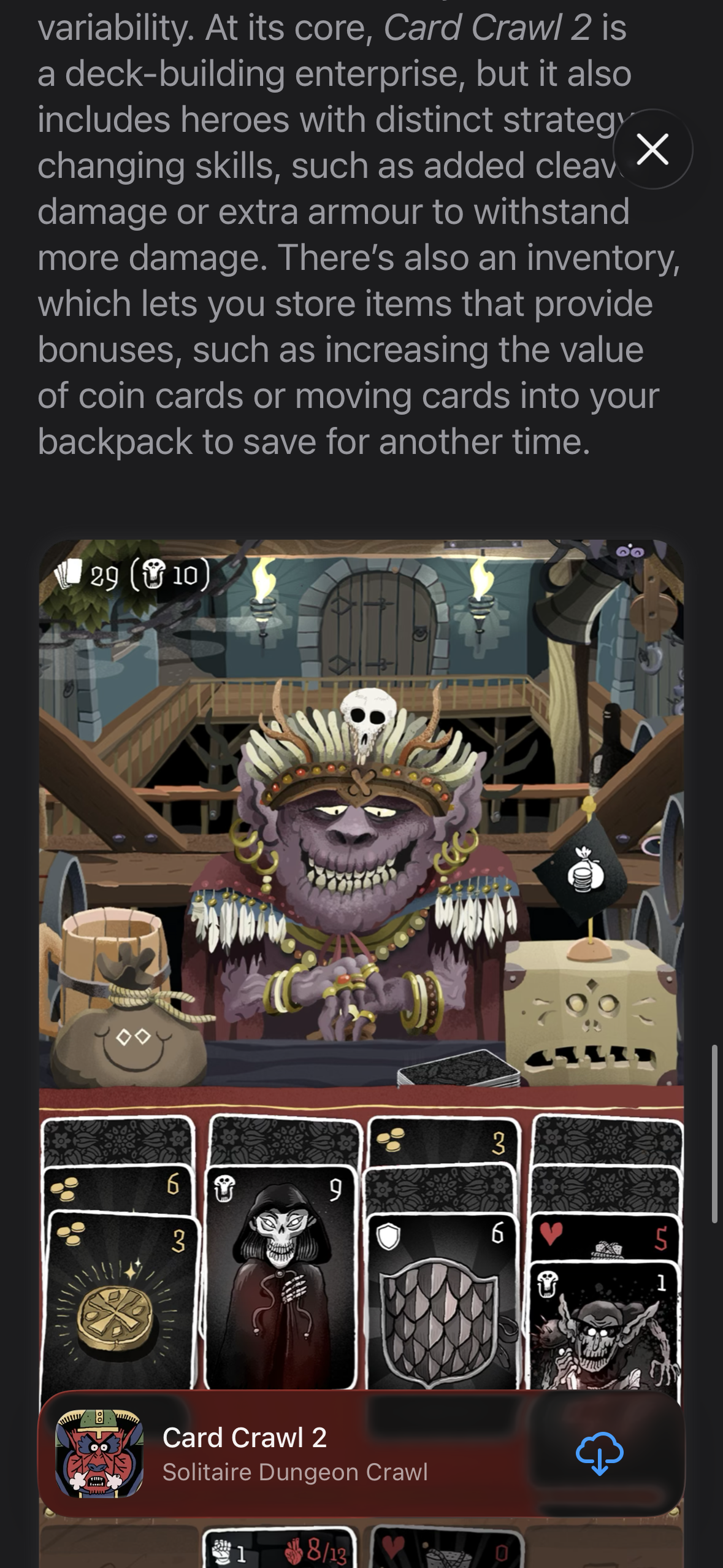
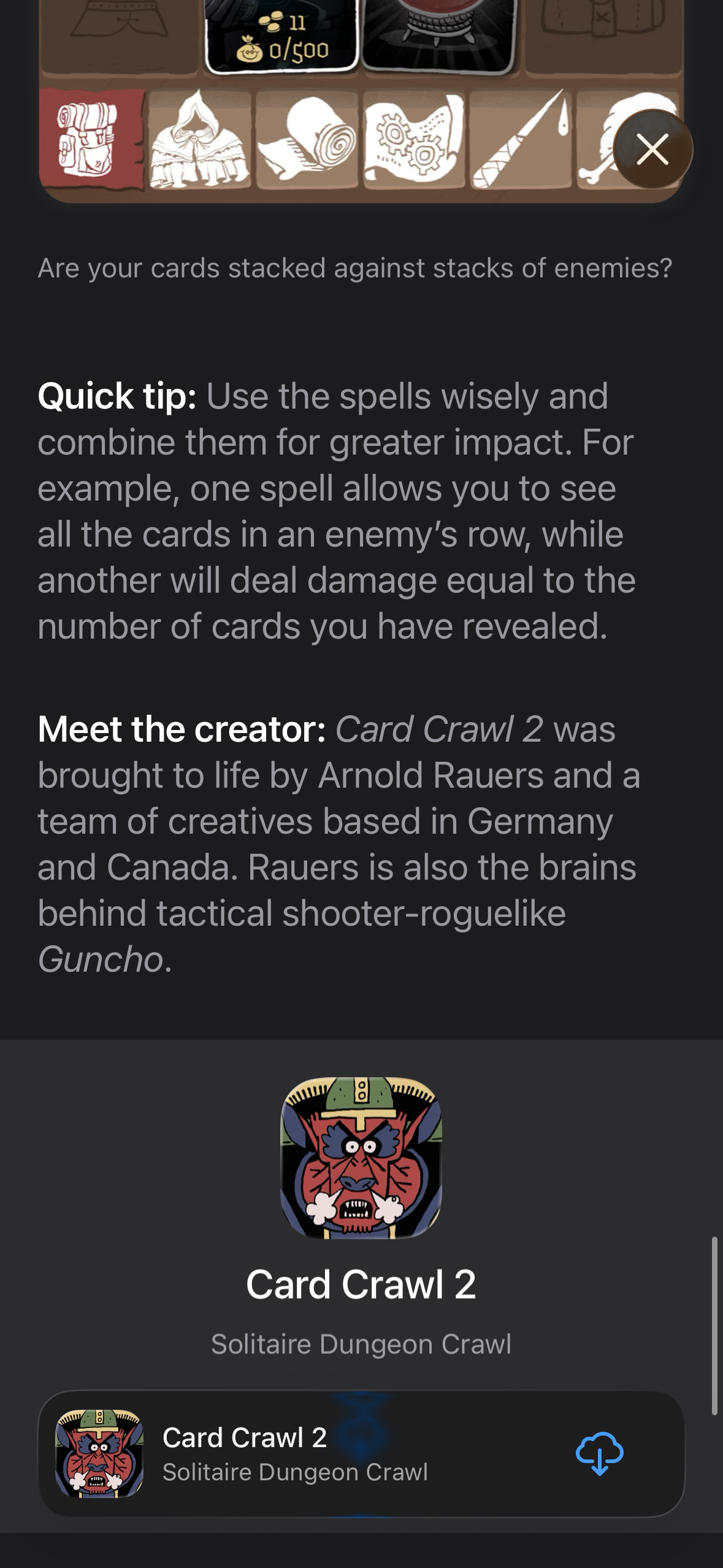
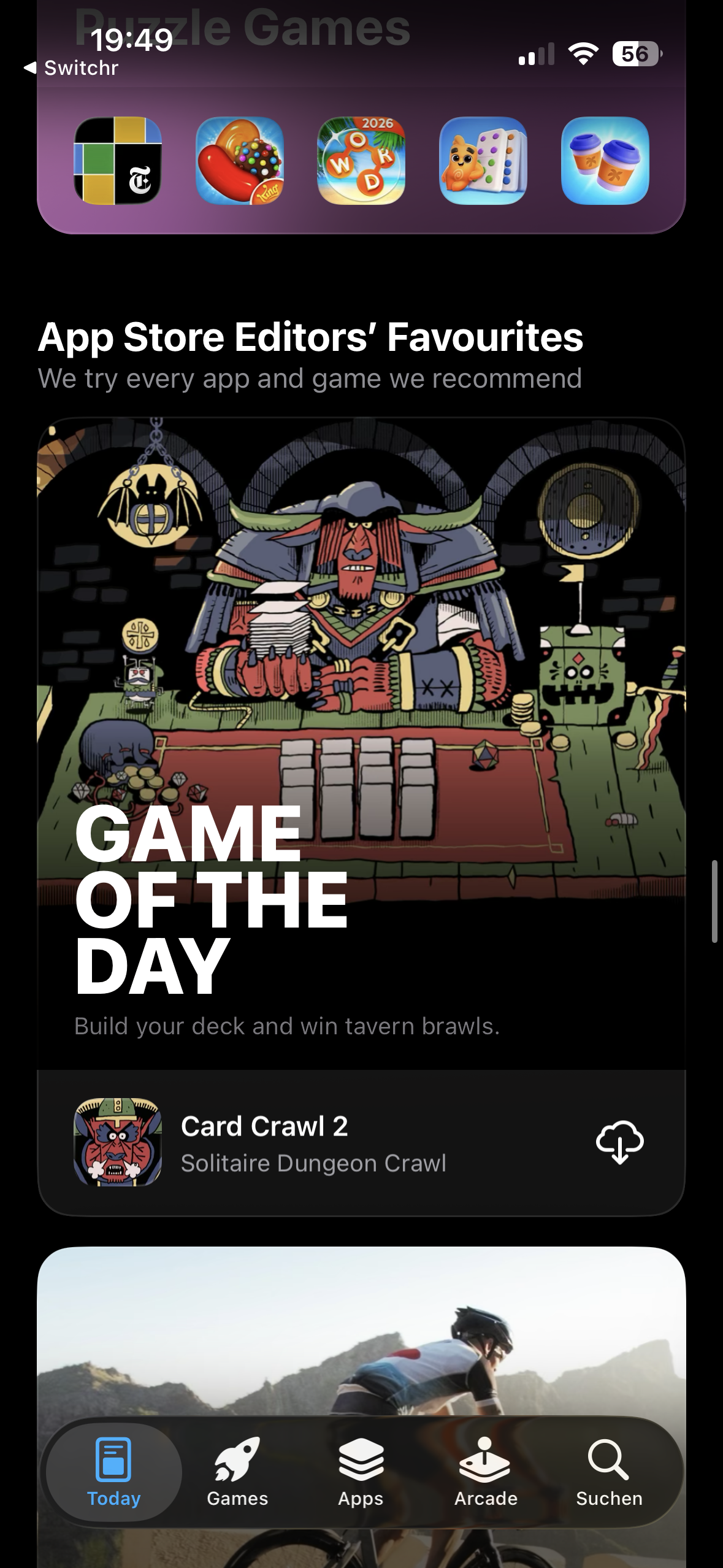
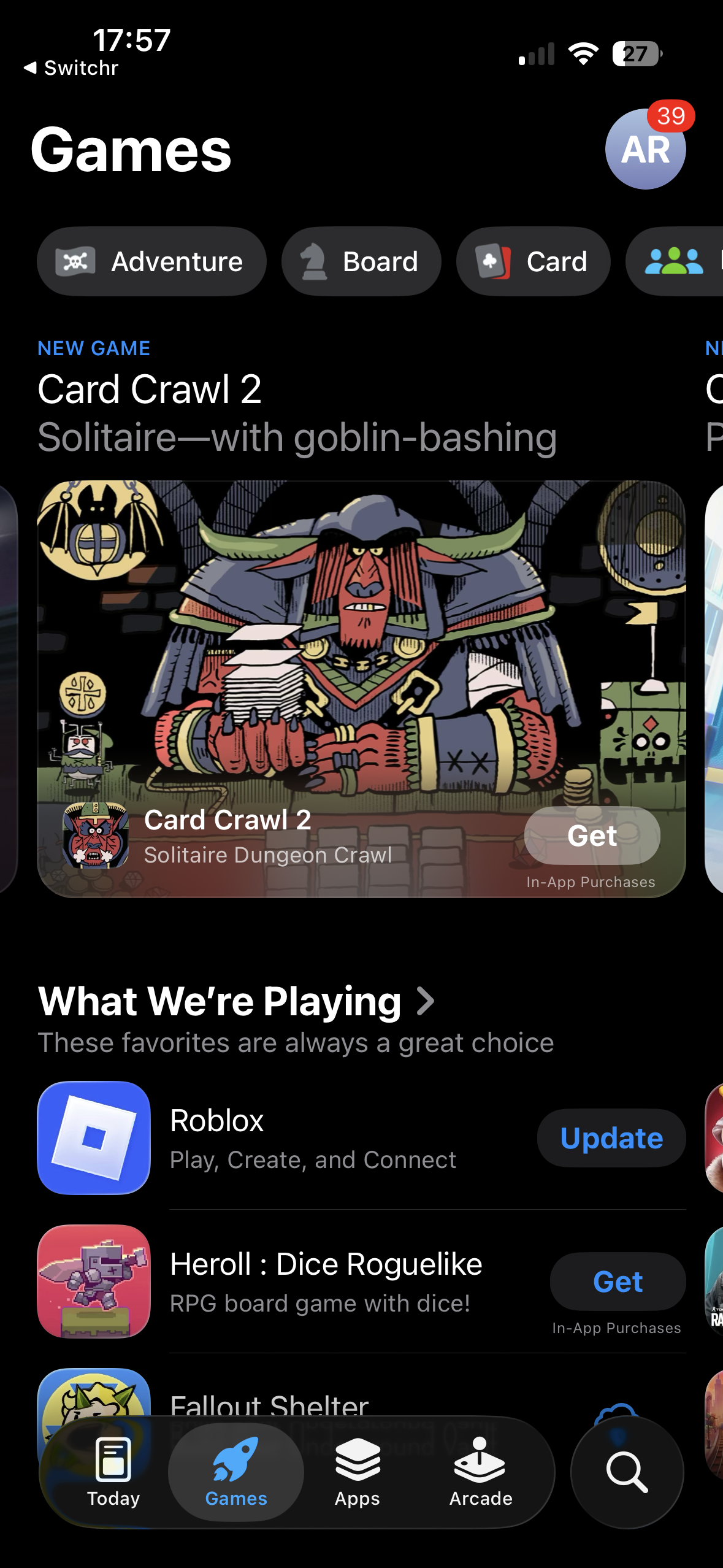
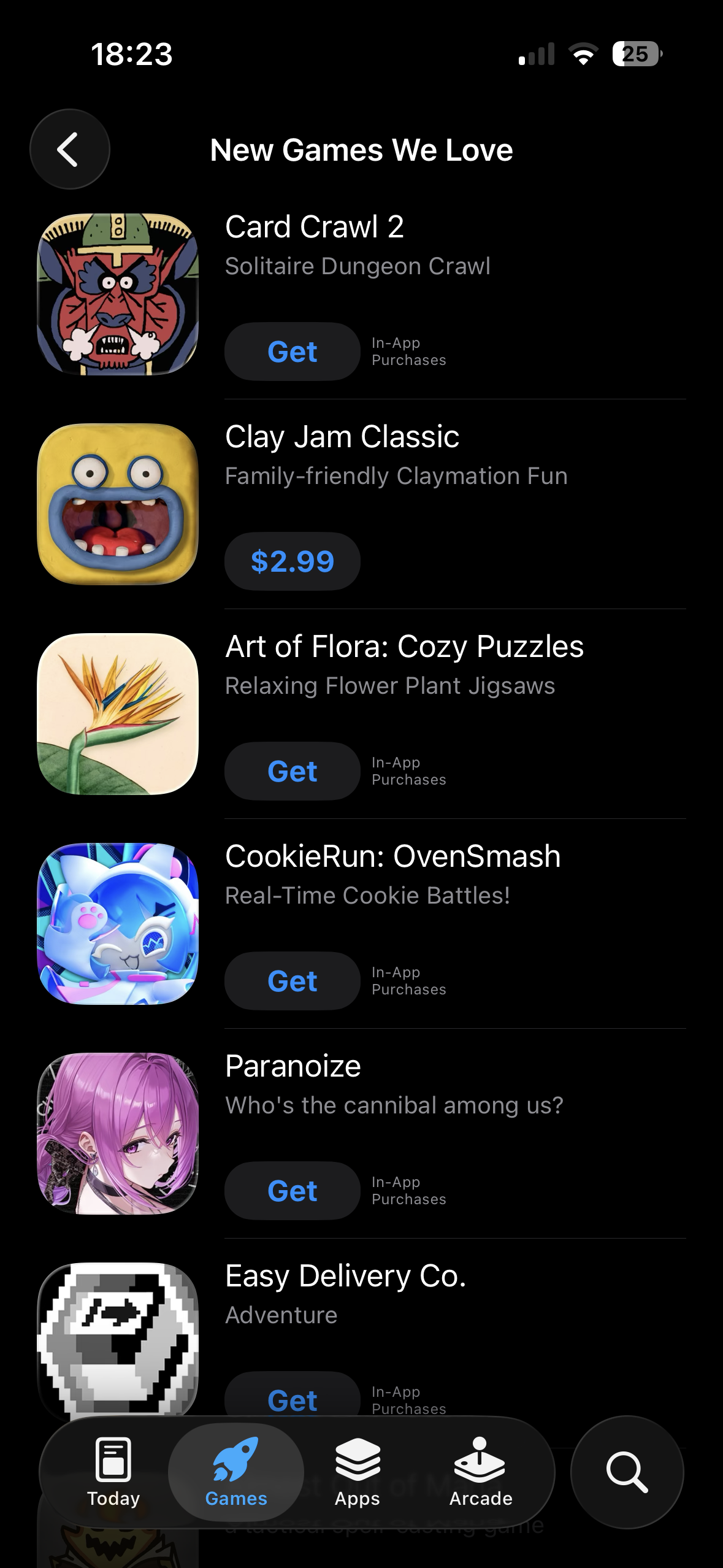
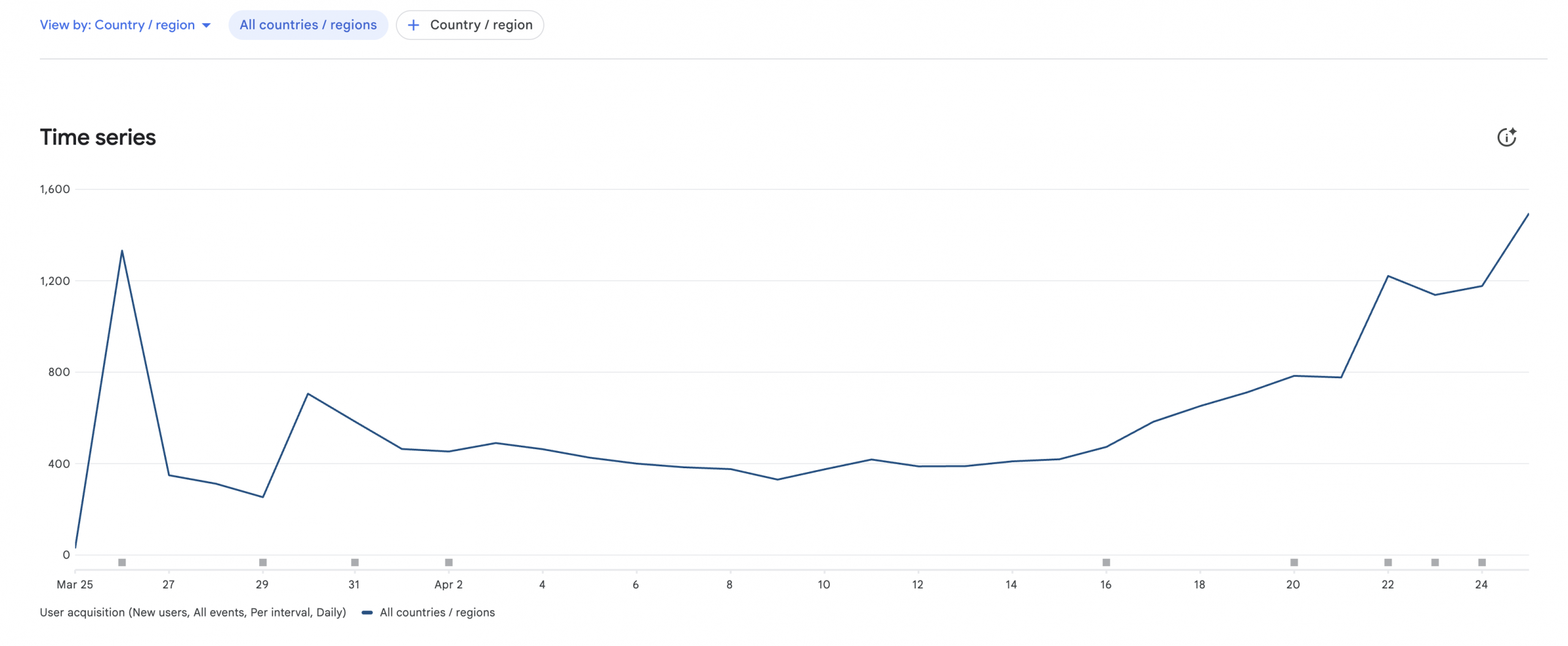
During launch week we received several features on the App Store, including a few Game of the Day features in smaller countries in the week following release. Pre-orders did not make much of a difference this time around, but we did gather around 3,000 people pre-registering through the App Store and Google Play. In addition to the features, we got a few mentions in the games press and on podcasts, and while appreciated, traditional games press coverage for mobile games is largely irrelevant these days. Most of the downloads in the first weeks came from store features and paid user acquisition, which I used this time to supplement organic installs and cross-promotion across my other card-based game titles.
Reception
As noted above, the initial reception and therefore store ratings were quite mixed, and in some regions outright negative, due to a vocal group of very upset fans who made their voices heard through 1-star reviews based on the game’s monetization strategy. Thankfully, after a wave of 18 bug fix updates along with improvements to gameplay and balancing, ratings recovered considerably. At the time of writing this post, we sit at an average of 4.6 stars from 822 ratings on iOS versus 4.58 stars from 801 reviews on Google Play.
Sales
I was quite nervous going into the release, given the weeks of negative feedback regarding monetization. Free-to-play game economies are notoriously hard to balance, but I kept most of my systems quite simple, and with the help of Claude Code I even created a prediction model that showed at what pace content is unlocked by different player groups (free versus paid) and where meaningful pinch points could be created to nudge players towards spending a little money. To my relief, the monetization is actually working really well. The game monetizes through a mix of durable and consumable in-app purchases, plus rewarded and interstitial ads for long-term non-payers.
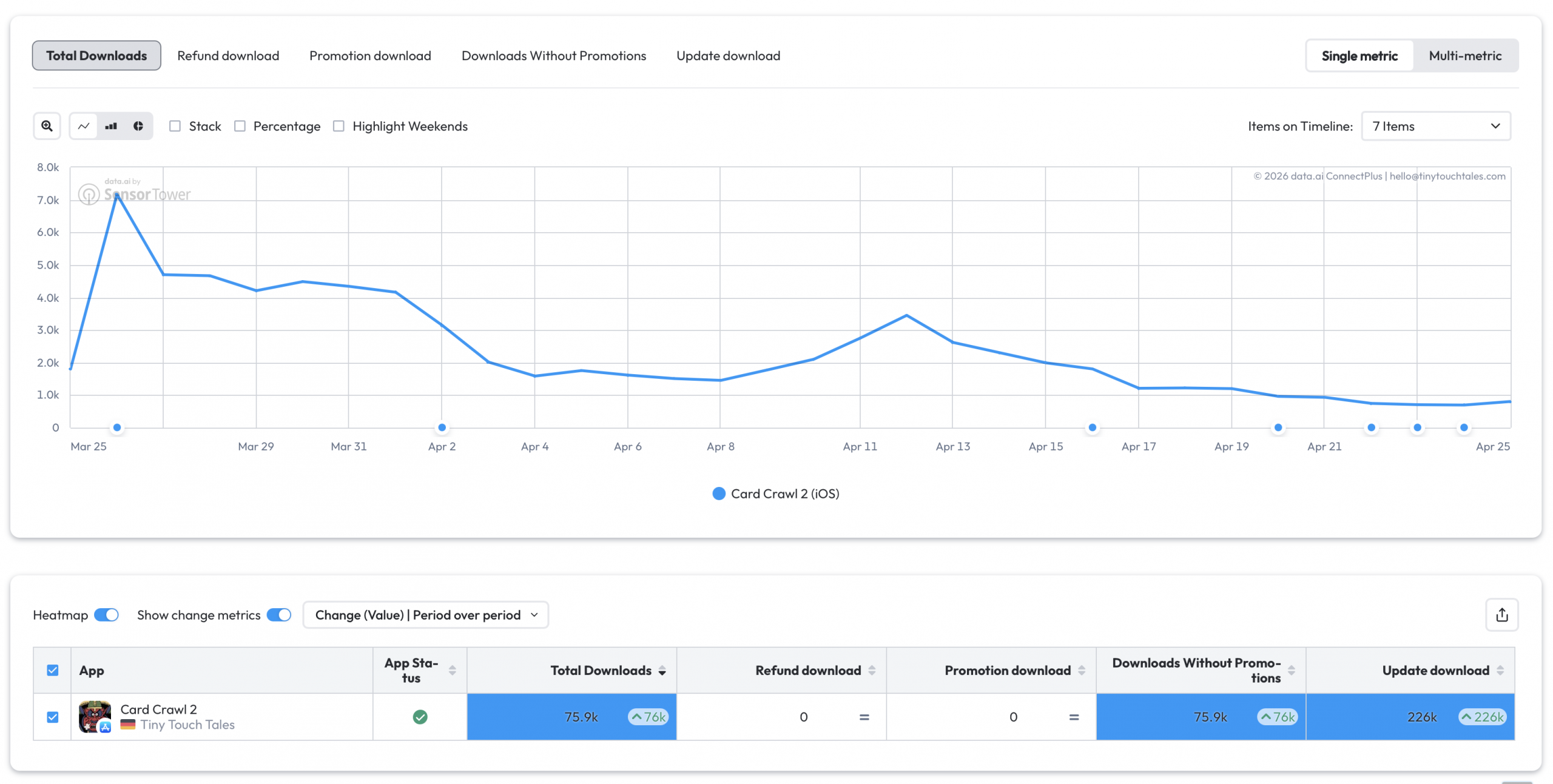
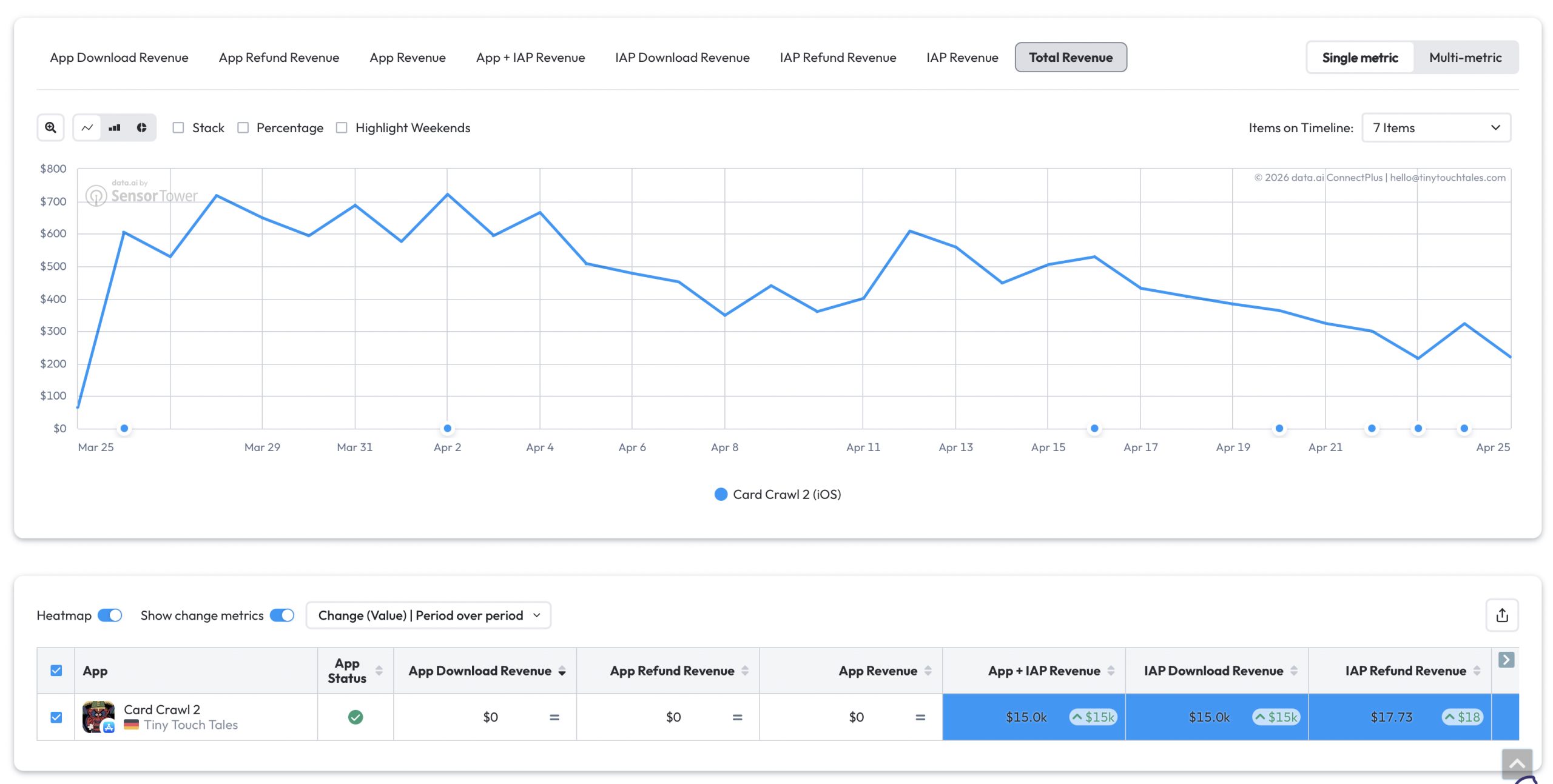
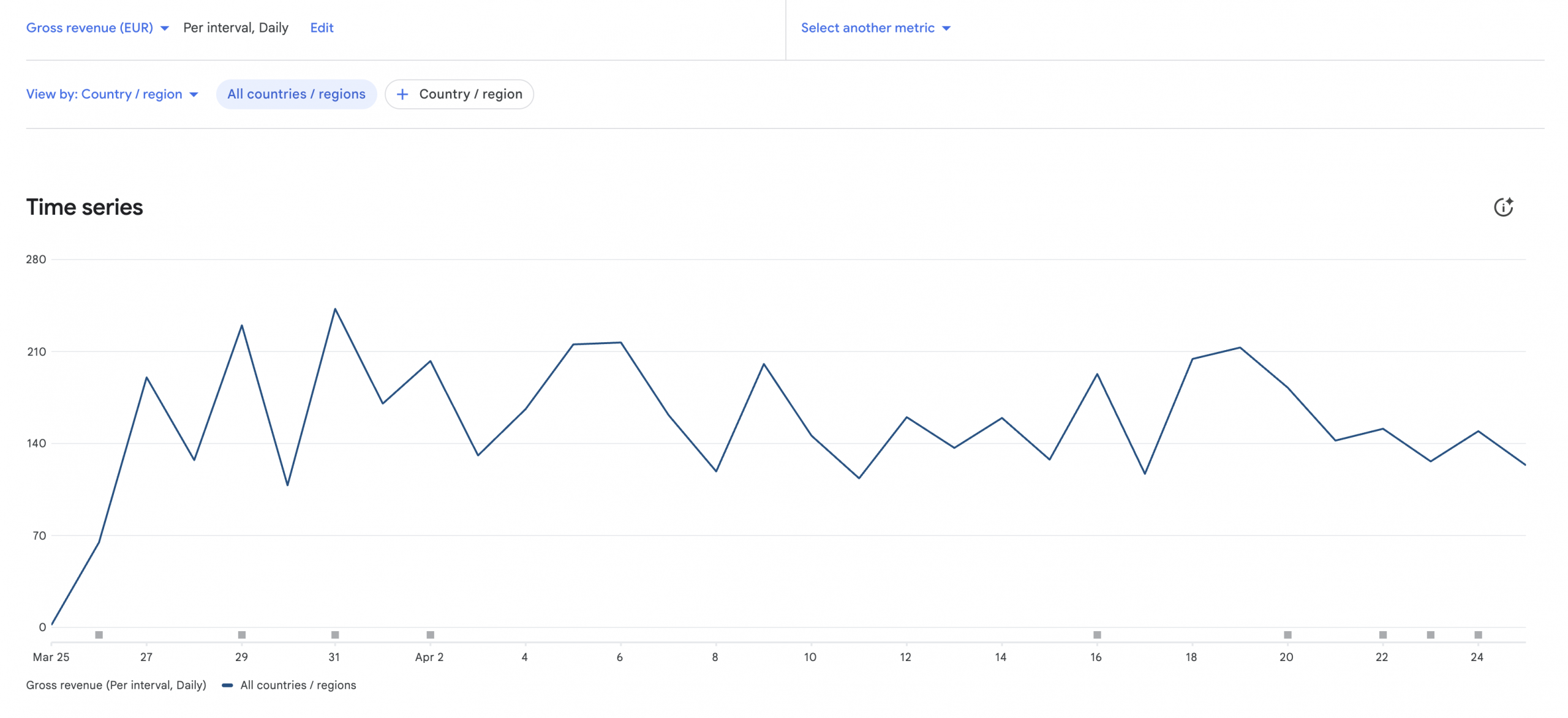
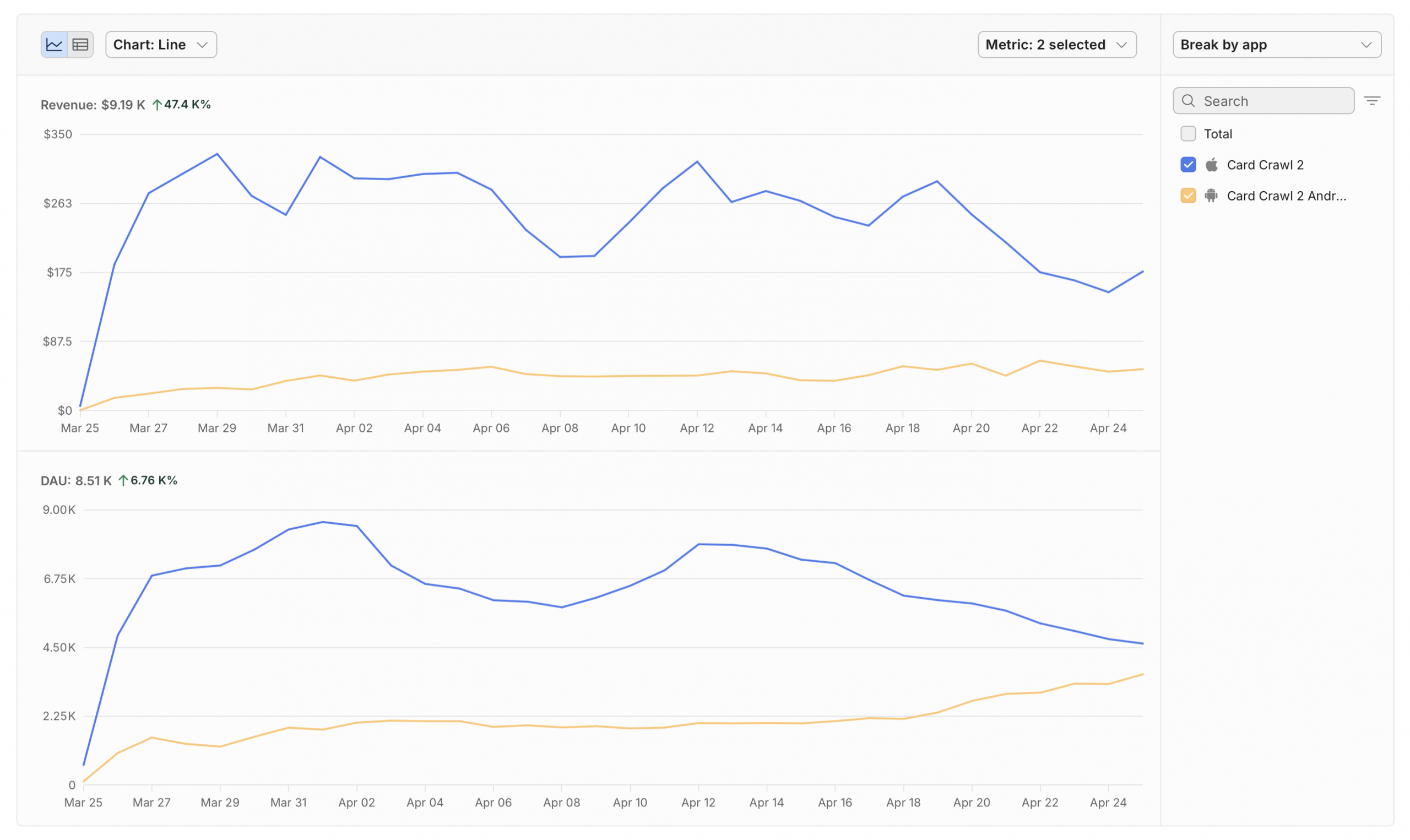
In the first month we reached 76,000 downloads on iOS and 15,000 on Android. Sales broke down to $15,000 from in-app purchases on iOS and $6,200 from in-app purchases on Google Play. Ad revenue was approximately $9,200 from rewarded and interstitial ads, split roughly 80/20 in favour of iOS.
For additional context, subscriptions on iOS hover around 850 at the time of writing.
In total we generated around $30,000 in the first month from all sources after platform fees. For comparison, my previous release GUNCHO made $15,700 in its first month.
App Store, Downloads / Revenue
Google Play, Downloads / Revenue
Ads, Revenue, DAU
Conclusion
What started as an accident grew into Card Crawl 2, my most content-heavy and probably best-designed game yet. A true sequel to the beloved Card Crawl that made my career possible 11 years ago. *tiny tear in my eye*
The development time of about a year was comfortably within my preferred range, and with the help of my irreplaceable Discord community we were once again able to ship a solid game even on release day. Collaboration with my long-term partners was smooth as always, and the additional new art contributed by so many talented artists was a really nice cherry on top. Despite a few upset community members in the days leading up to release, the game has proven to be well received on both the gameplay and monetization fronts. Thanks to the easy expandability of the game systems, we are quite eager to keep adding new content, especially since we had so many ideas that could not fit into the release version.
A big thanks once again to my Discord and testing community for helping us squash hundreds of bugs, improve balancing, and taking on the hardest difficulties even before we tuned several modes and characters!
And of course, thank you to everyone who played Card Crawl 2 and helped us with the development.
Be sure to check out our Discord or my Newsletter to get updates on what we are working on next.