Hi! I‘m
Arnold Rauers.
Since 2012 I create video games
with various talented people
as Tinytouchtales.

We've made Card Crawl 2, GUNCHO, Geo Gods, Card Crawl Adventure, Gnomitaire, Maze Machina, Miracle Merchant, Card Thief, ENYO and Card Crawl which are available on the App Store and Google Play. I've also released a few games on Steam.
I publish Game-Jam games and showcase my game ideas and prototypes on Itch.io.
If you would like to support my work outside of buying my games, consider becoming a Patron.
You can subscribe to my Newsletter for regular updates and join our Discord community to hang out.
2025-12-30 - Tinytouchtales
End of Year 2025
Welcome to My Annual End-of-Year Blog Post – 2025 Edition
This year passed quickly once again while my team(s) and I were busy working on two new games, updating my most recent release GUNCHO with new content, exploring a new platform (Roblox), and continuing to work on a few old prototypes.
I also retired Gnomitaire from mobile to Itch.io and, in addition to that, resurrected two of my old mobile games, MATCHAGON and One Tap RPG, to be playable via WebGL on Itch.io.
Card Crawl 2 Development Progress
This year, my most worked-on project was by far Card Crawl 2. My upcoming true sequel to the beloved original Card Crawl from 2015 has been a real blast. While we created plenty of new content for the game, we were also able to repurpose a lot of art and content from Card Crawl and Card Crawl Adventure to create a visually rich new game that uses Card Crawl’s original design in a completely new and extended experience.
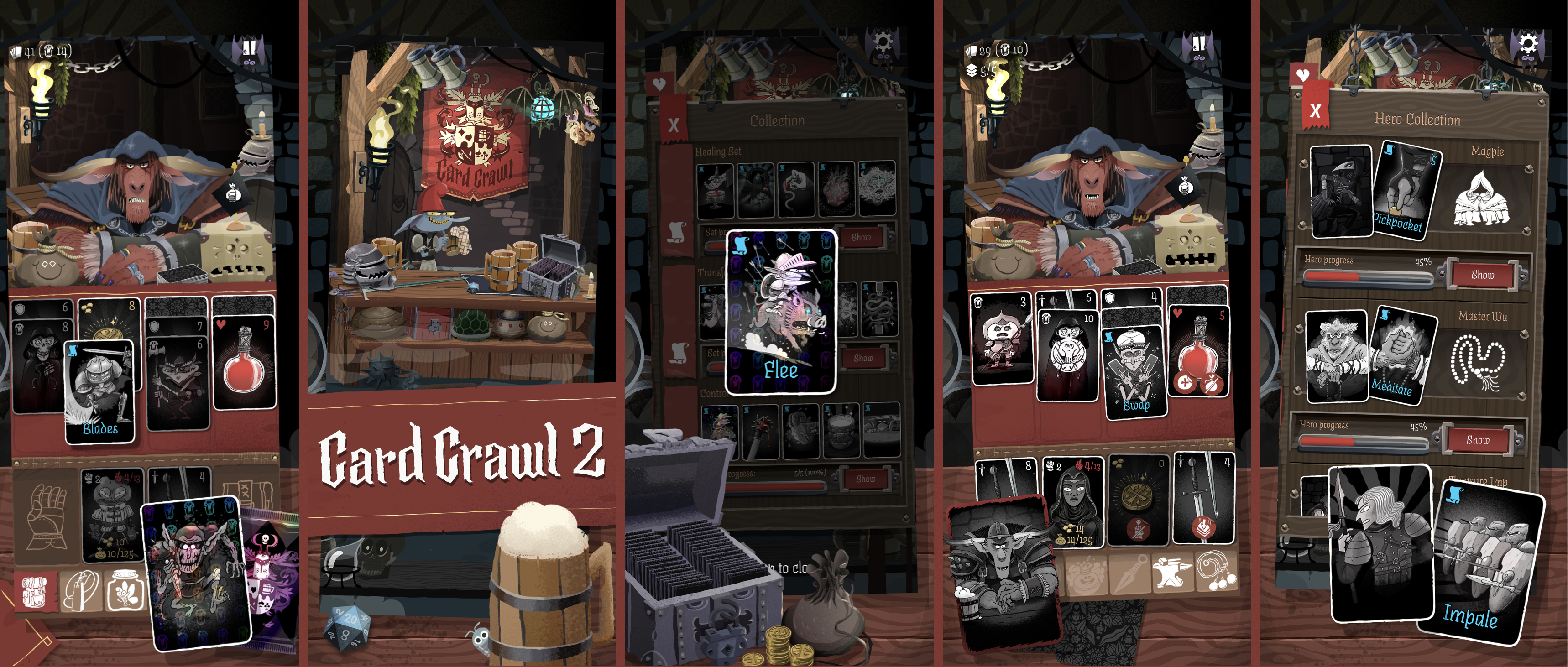
If you have not seen it yet, Card Crawl 2 introduces a new core mechanic where up to four cards are now stacked in four columns. Players can sort and move cards Klondike-style. After three card actions, four new cards are dealt and all cards in each column are pushed down, creating a new layer of strategy and tension.
We also introduced a new layer of gameplay with Hero cards and equipment items, making the base gameplay even more interesting.
The game now features 50 spell cards, 50 equipment items, 8 unique Hero cards, 4 new main game modes, a weekly challenge, and 5 unique daily challenges with special gameplay modifiers.
Inspired by Balatro, we also introduced card variants, which add a second ability to the base spell card. Right now, we have Holographic, Polychrome, Golden, Negative, and Foil versions of all spell cards, which can be unlocked.
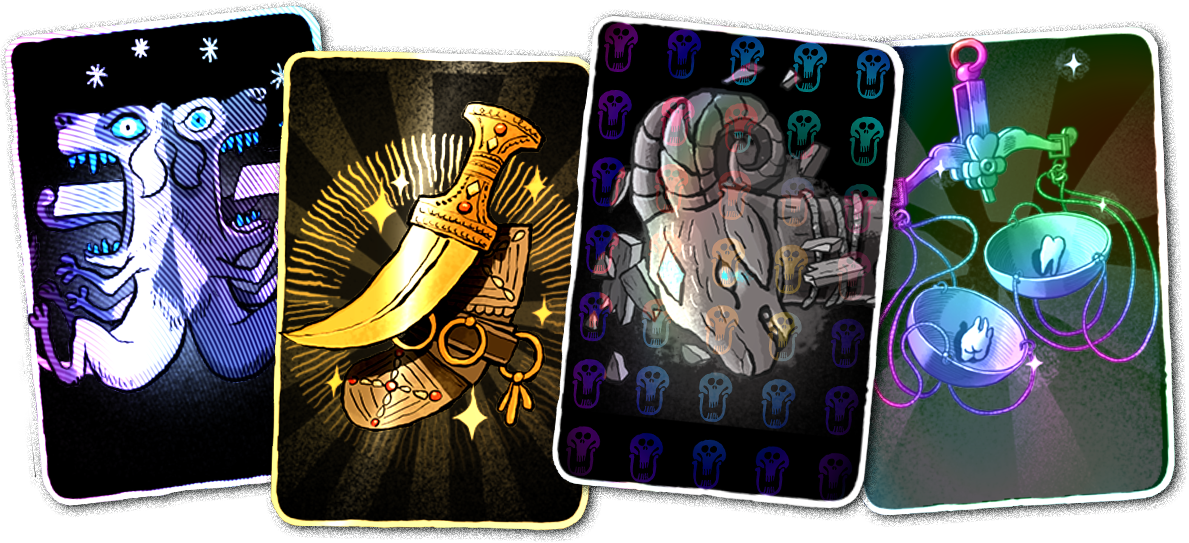
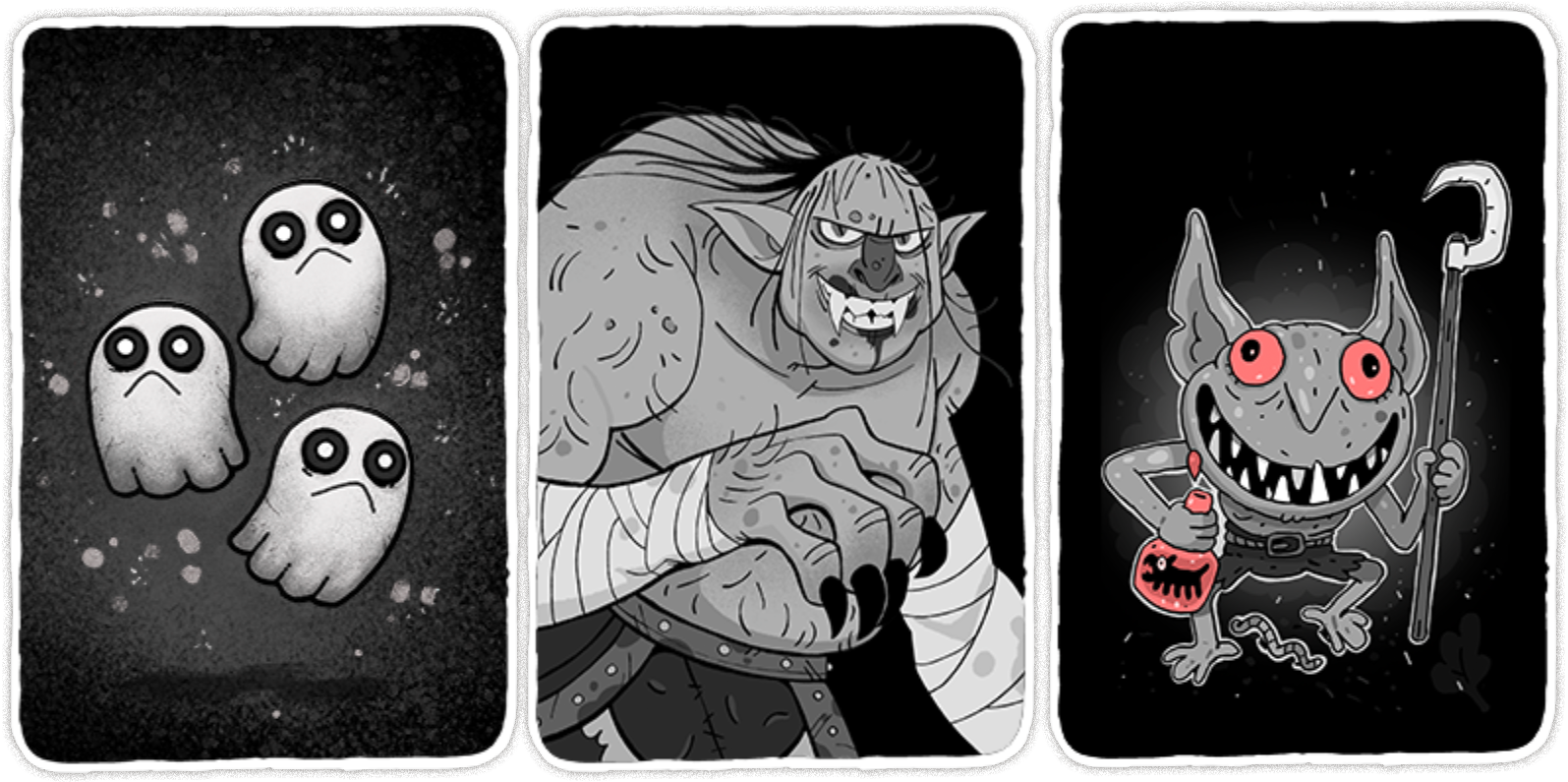
Another cool feature we added is unique monster card skins that can also be unlocked. I commissioned a bunch of my favorite artists to draw monster card sets for the game, and they all turned out amazing. I do not want to spoil all of them here, but take a look at this small showcase.
Card Crawl 2, like all my recent games, has been greatly supported by my playtesters, mostly via Discord, where we discuss gameplay, bugs, improvements, and pool ideas for the game. At this point, I cannot imagine working on a new commercial release without the tight feedback I get from early playtesters, who are now an integral part of the game’s development. So a big shout-out to everyone helping with and playing Card Crawl 2 since early last year.
Card Crawl 2 is still on track for an early 2026 release. Right now, I am working with Sam Webster on all things audio and with Max on the final polishing touches of the game. I also need to improve some monetization aspects, since I want to release Card Crawl 2 as a true F2P game that will hopefully sustain us for a few years.
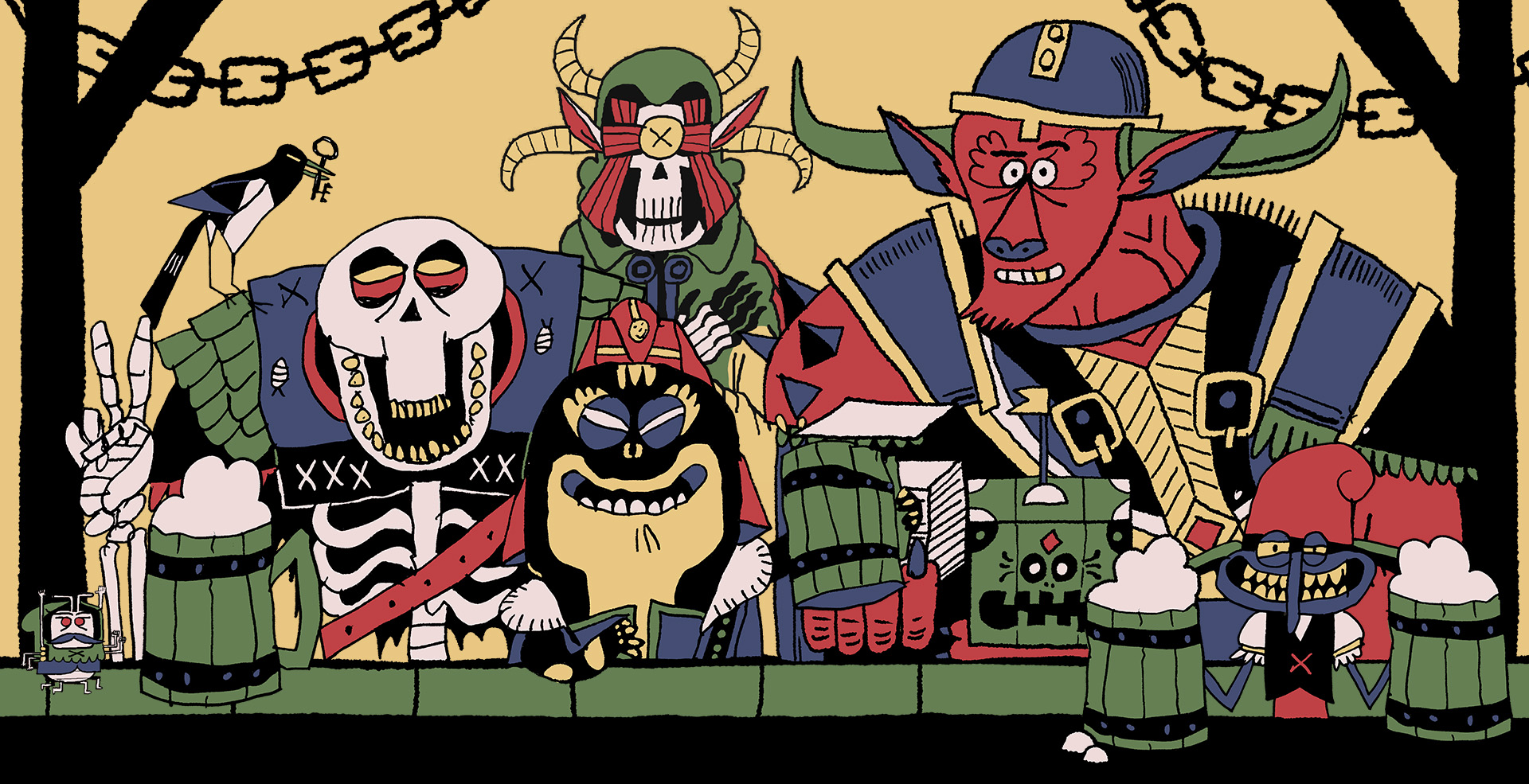
The Card Crawl 2 beta is still open, so if you are interested in checking out the game, you can do so via beta.cardcrawl.com.
GUNCHO Content Update, GUNCHO Play Pass
In April, we finally released our first content update, “New Outlaws,” for GUNCHO. I already wrote about the game’s update here and also posted a big “1 Year of GUNCHO” post where I go into detail about the game’s first year.
The content update itself was quite fun to make, and we were able to expand on enemies that we could not include in the initial release. We added the Brute, a shotgun-wielding outlaw that can target three tiles in front of him; the Coward, a melee character protected by a barrel who effectively has two lives; and the Assassin, a bow-based ranged character who, in addition to an artillery-style attack, can also set tiles on fire or target explodable items for extra chaos.
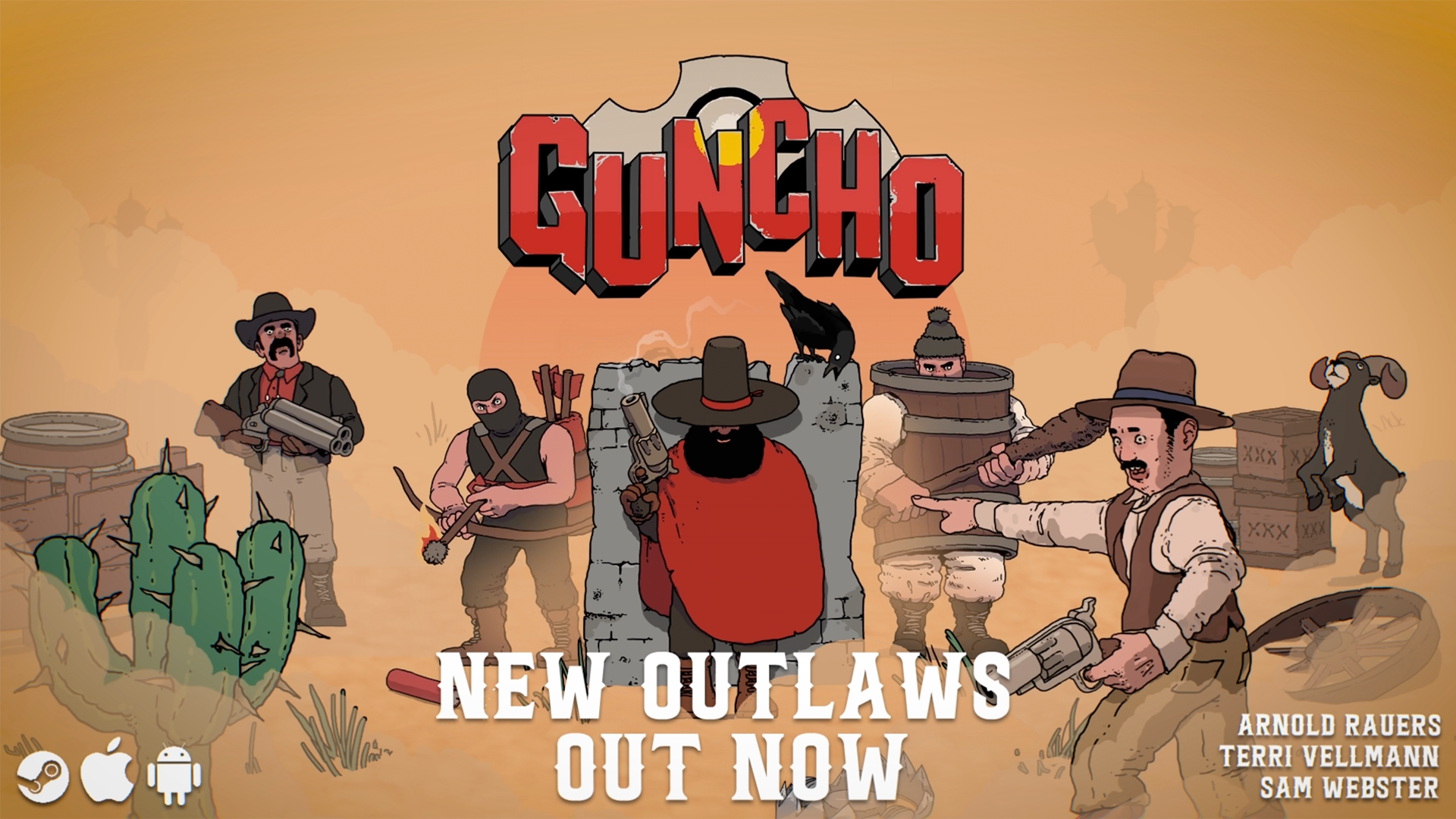
At the beginning of December, GUNCHO also finally made it into Google Play Pass, where it will hopefully find a whole new audience and generate additional revenue for us. As stated in the “1 Year of GUNCHO” post, the game has already generated substantial revenue since release and continues to be one of the strongest-selling games in my portfolio.
Prototyping
This year also included some time to dive back into prototyping. While I really wanted to continue my spaceship-based autobattler, I could not get it to work in a way where I felt the initial idea would come together properly. While I still think the modular grid-based design and Bazaar-like time-based abilities could work, it was simply too much to bring together in this version. I might revisit this idea at some point in a much more simplified form, but for now I have put it down.
Gatchji-Moji
In contrast to that, I did finish my gacha-gambling-inspired prototype, influenced by Luck Be a Landlord. It once again proved that the strong design foundation of these types of games works well in different contexts.
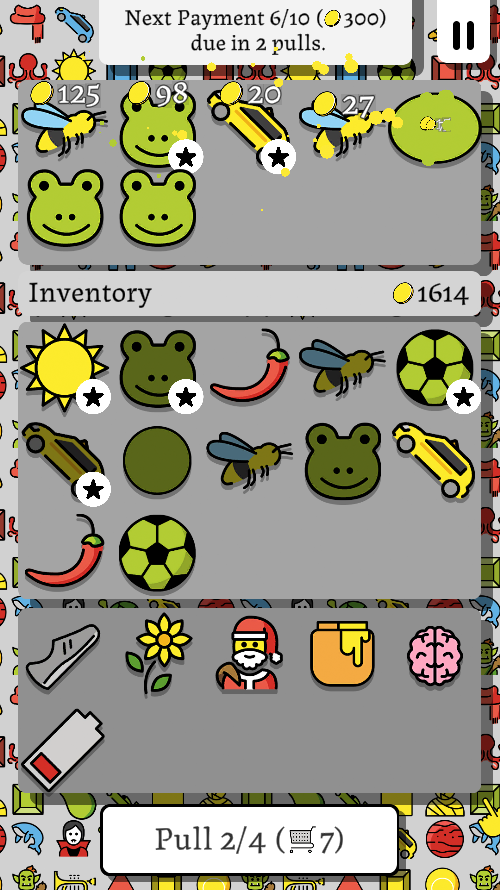
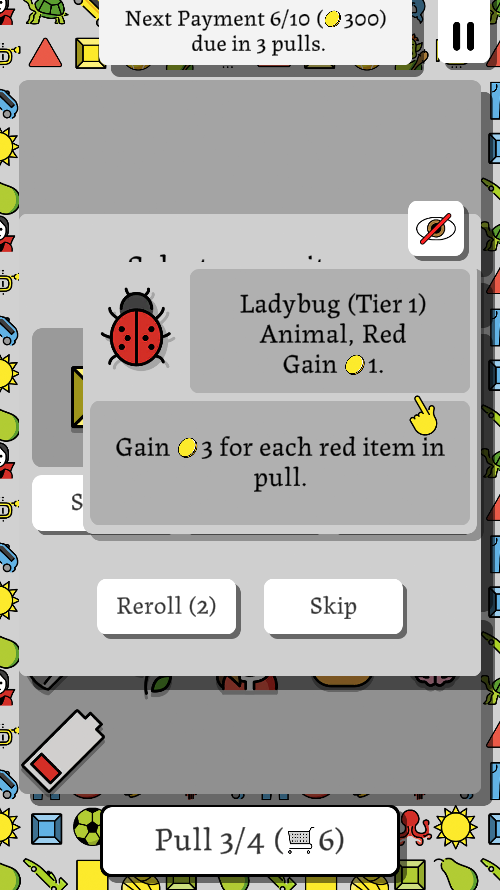
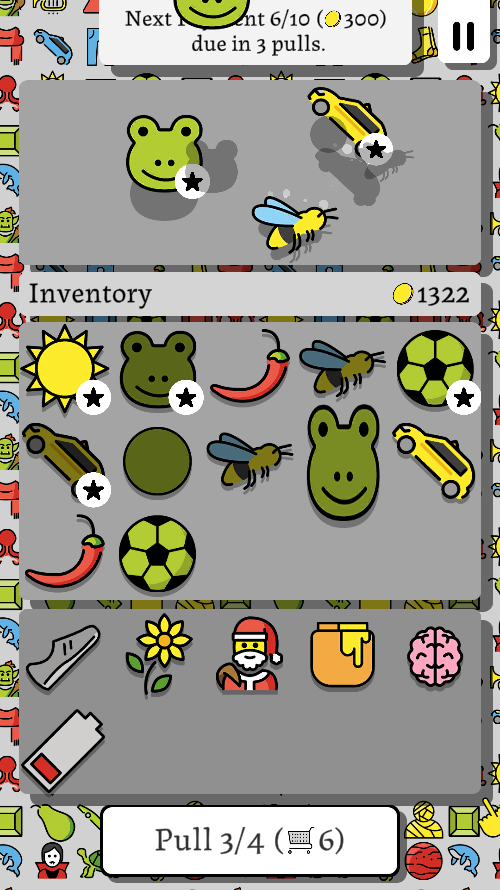
In my game, instead of building a slot machine, the player builds the contents of a gacha machine and pulls different combinations of items each turn. Items can affect other items in the pull or items in the inventory that the player has drafted. After each round, you draft a relic or artifact item that further enhances, modifies, or synergizes with your inventory.
I also added a small modification menu after each round where you can remove, exchange, and duplicate items. One additional design change is that you can triple items and make them perform their action twice on each activation.
I used the Open Emoji library to cobble together some art for the items. While I did not do a particularly good job of matching theme and ability for each item, it still works quite well. The game is not balanced at all, and there are some very degenerate synergies that can let you go infinite pretty quickly. With some more work, this could be fixed and probably extended further. I really like the prototype and might reuse the core concept in the future.
You can play Gatchji-Moji right now on Itch.io.
Noob Hunterz (Roblox)
In the middle of the year, I explored a totally new platform for me, Roblox. I knew Roblox had been very popular for quite some time, but the recent buzz around mega-hits like Grow a Garden and Steal a Brainrot, which reached millions of daily active users, sparked my interest again.
It was fascinating to see that the platform has a huge player base and exists in a very separate bubble compared to mobile game stores or Steam, yet still attracts massive audiences, mostly very young players. Nonetheless, it is a very interesting development environment, and after diving into the engine with the help of AI, I managed to more or less vibe-code my way into a working multiplayer game.
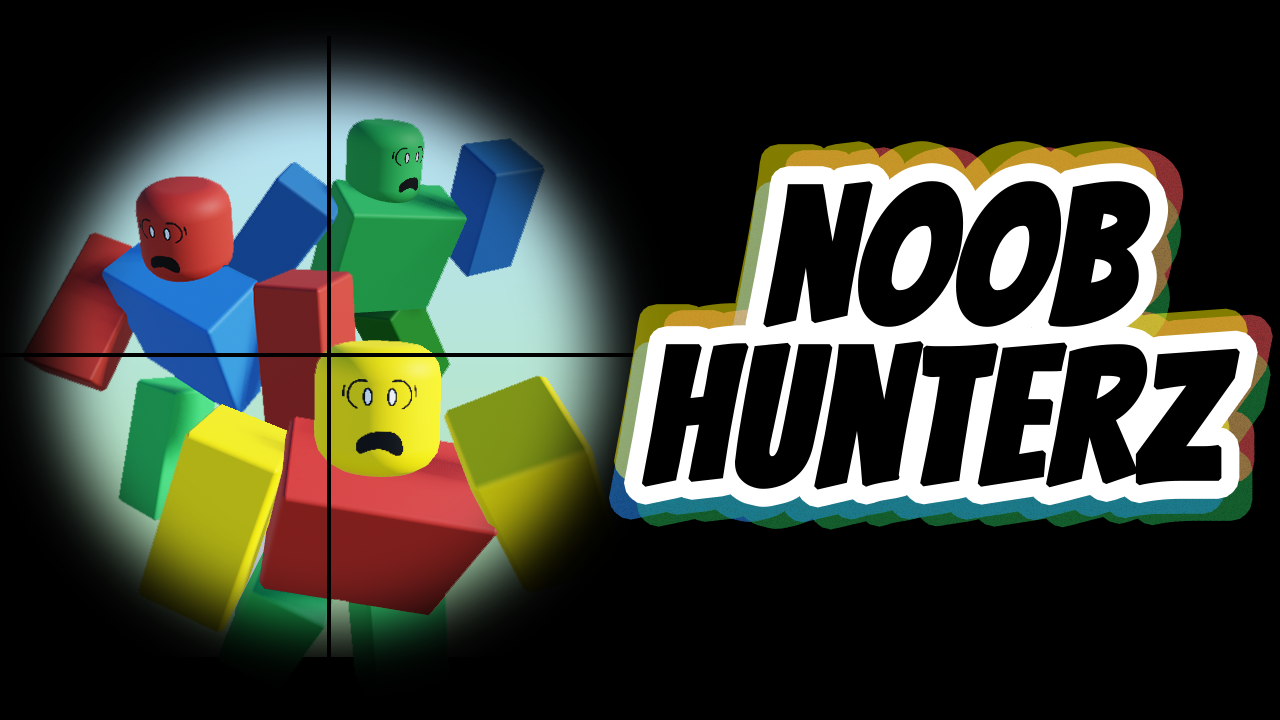
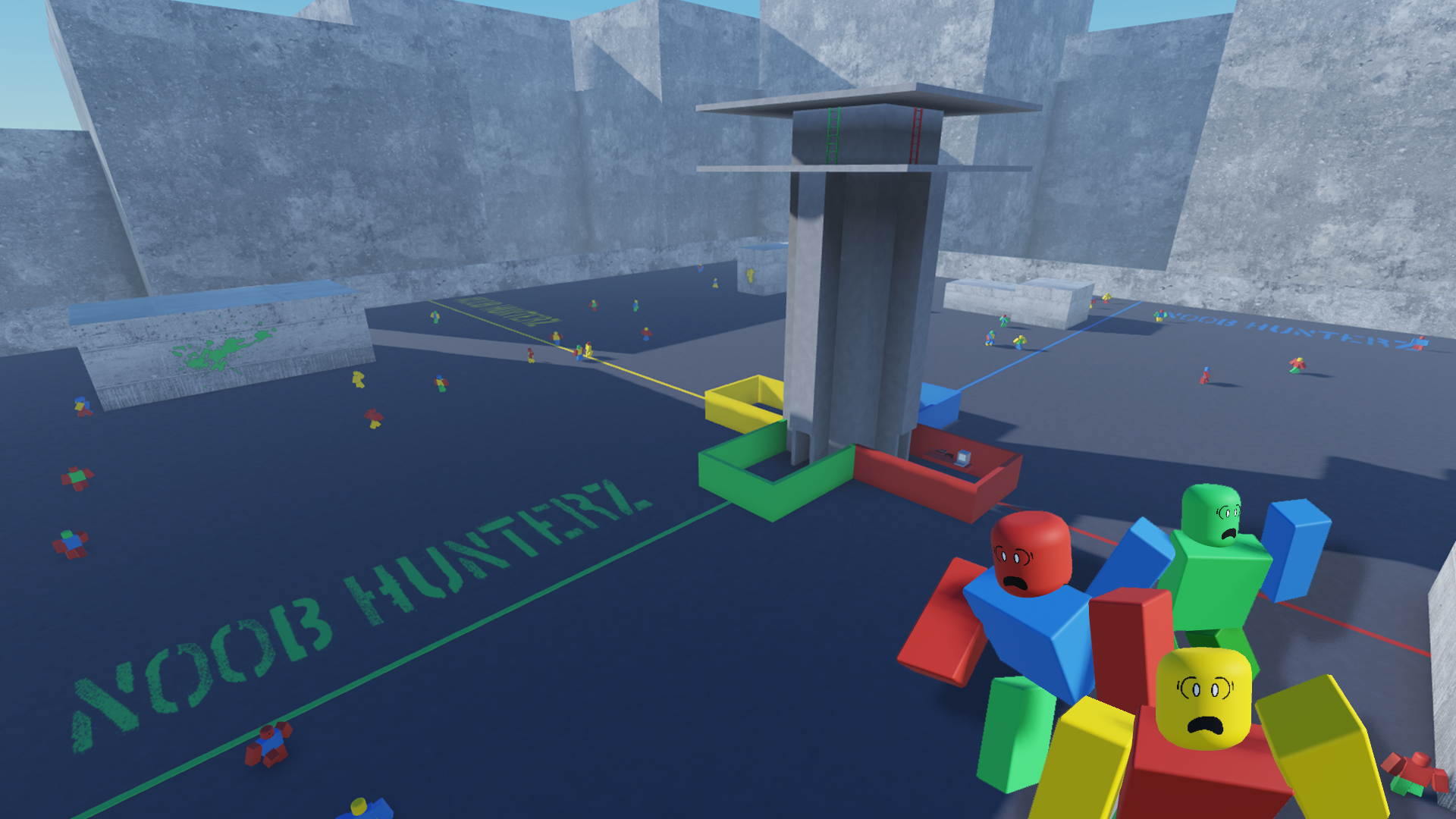
In Noob Hunterz, you are one of four hunters competing in an arena-style environment to see who can eliminate their targets first. “Noobs” is a very specific term in Roblox, as they are the base humanoid characters with the distinct Roblox look. At the beginning of the game, I generate up to 50 noob NPCs, each with a distinct color combination for their head, arms, torso, and legs. Each player gets a random noob assigned as their target and must find and eliminate it from a sniper tower overlooking the arena. The first player to eliminate all of their targets wins.
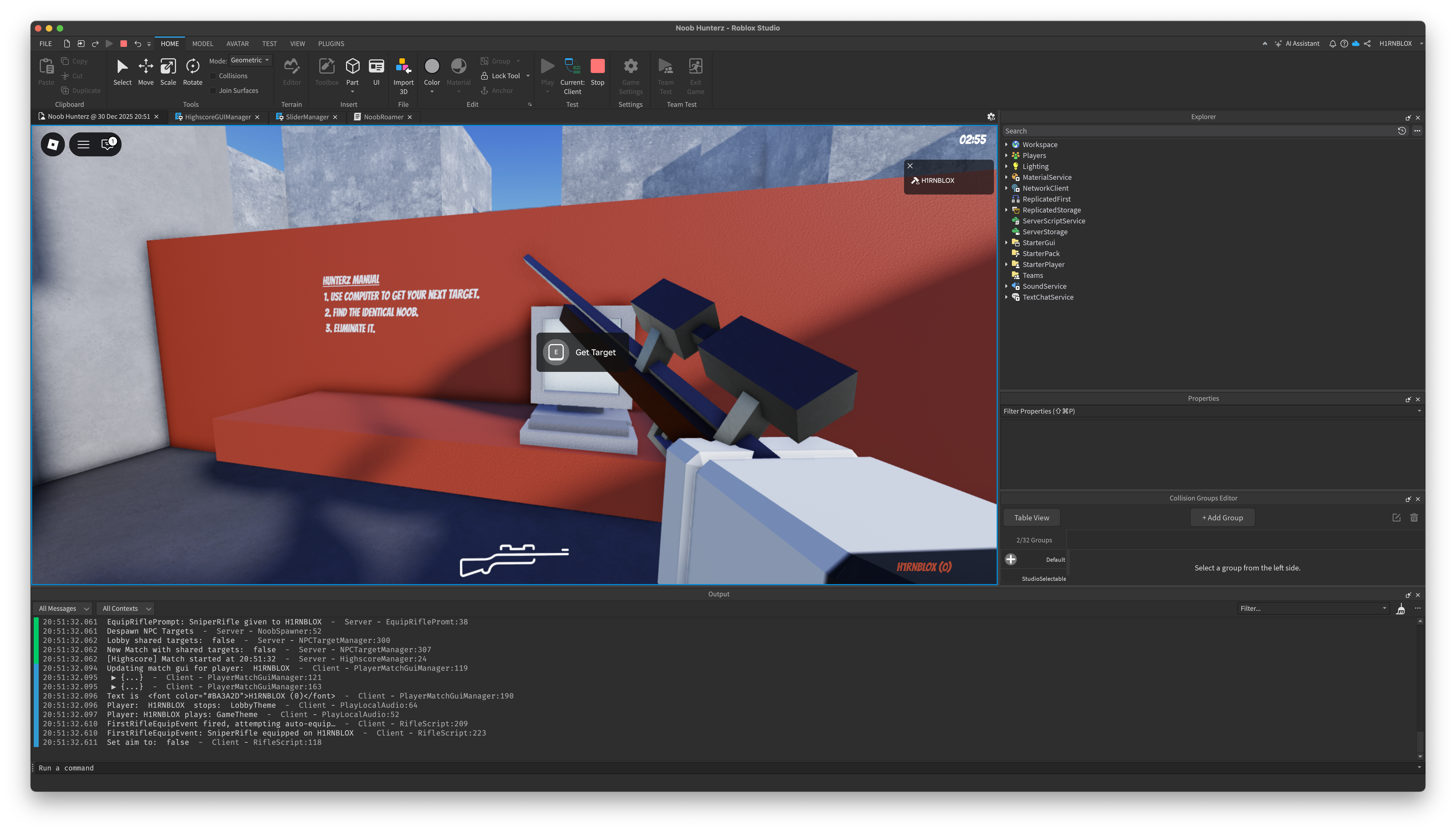
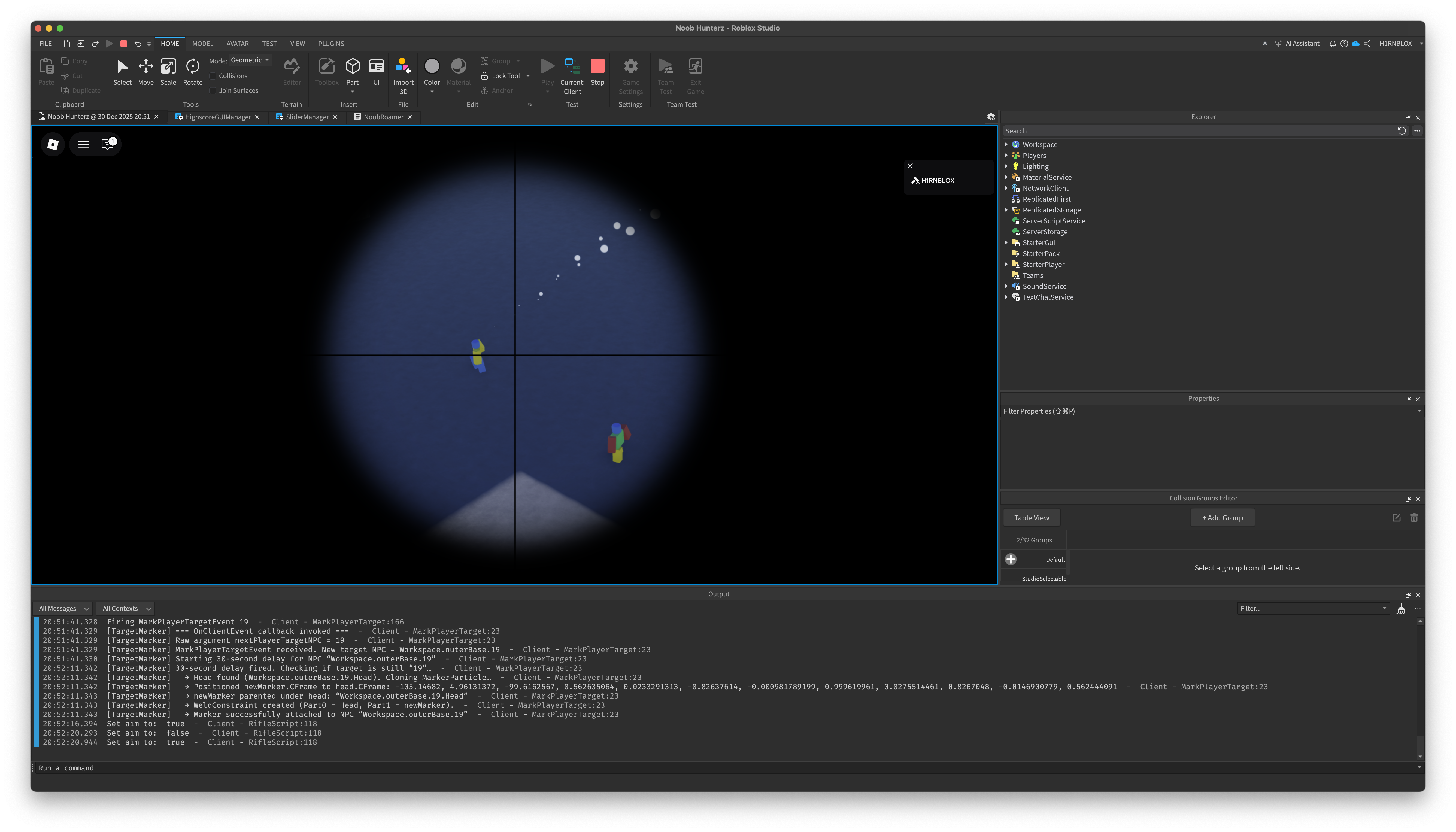
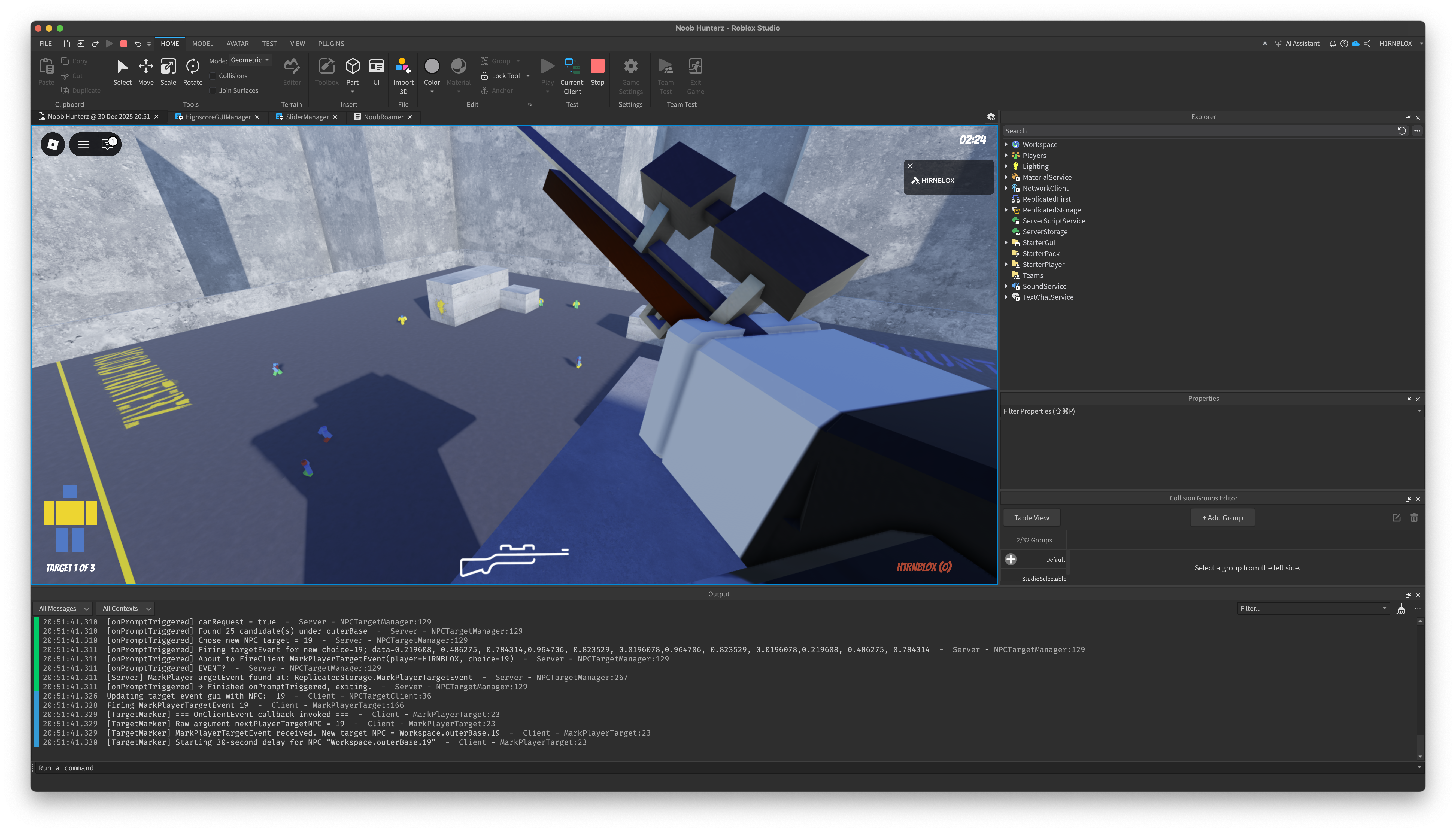
The game had a few thousand plays, which is obviously not much, but it was still a great learning experience getting to know the engine and learning Roblox coding in Lua, which was quite a change from my C# background. I would like to return to Roblox when I have more time to work on another multiplayer idea that came up while developing Noob Hunterz.
If you are interested, you can play Noob Hunterz on Roblox.
Gnomitaire Retirement
As you may know, Google Play and the App Store regularly change requirements and push developers to keep their games up to date. These maintenance updates can take quite some time, especially if you have multiple games in the stores. While most of my games generate enough revenue to justify these updates, Gnomitaire does not, as it was a small COVID side project from 2020. I still like the game, but I decided to take it offline on mobile since maintenance had become more of a hassle.
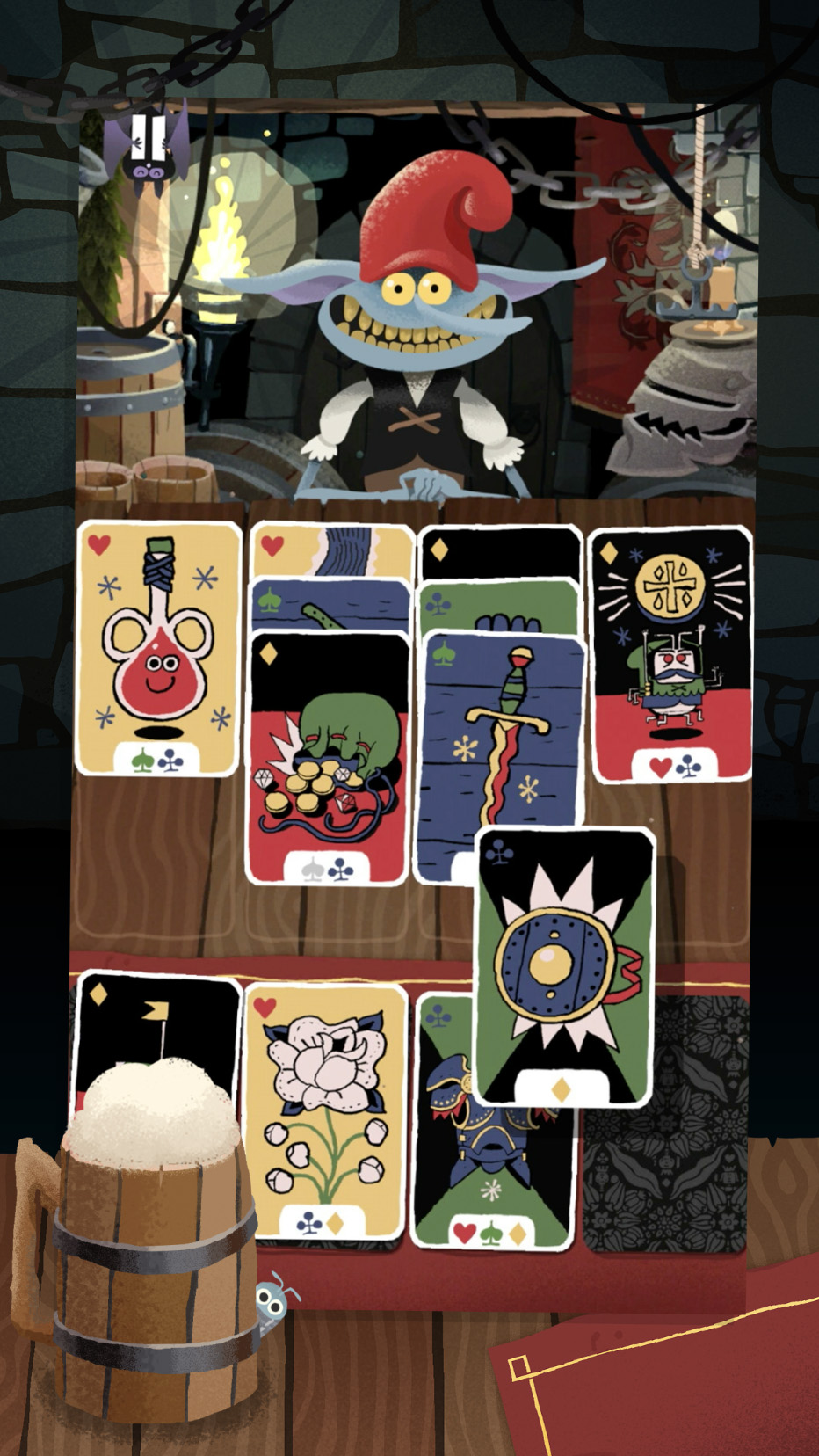
I published the game on my Itch.io page as a WebGL browser-playable version, and it received quite a lot of buzz due to a front-page feature on Itch.io. It got many comments complimenting its art and simple gameplay and brought in quite a few new followers on the platform.
I was once again surprised by how well the game runs in WebGL, and I have to say that Unity handles this very well these days.
Resurrection of Matchagon (2012) and One Tap RPG (2014)
Motivated by the good results of the Gnomitaire Itch version, I decided to look at some of my very old projects to see if it was possible to resurrect them as well. I brought back Matchagon, a Tetris and matching-style game from 2012, and One Tap RPG, a pachinko-like dungeon crawler from 2014. Both games were made with very old versions of Unity, but with some bug fixing, I got them running in Unity 6.2 and exported WebGL versions for desktop and mobile browsers.
This was another fun exercise, and it is always enjoyable to revisit old projects and make them playable again in some form.
You can play both Matchagon and One Tap RPG on Itch.io right now.
High Stakes Collaboration
The final thing I worked on this year was a new collaboration with Krystian Majewski of Lazy Devs Academy. Krystian and I go way back to our connection at the Cologne Game Lab, where he teaches game design and development. His current work focuses on the PICO-8 platform and teaching others how to make games with it. In 2020, he participated in the “A Game by Its Cover” game jam, where he created High Stakes. I always loved the game’s simple concept and wanted to see it on mobile, so this year we finally teamed up, and I will be officially working on the mobile version.
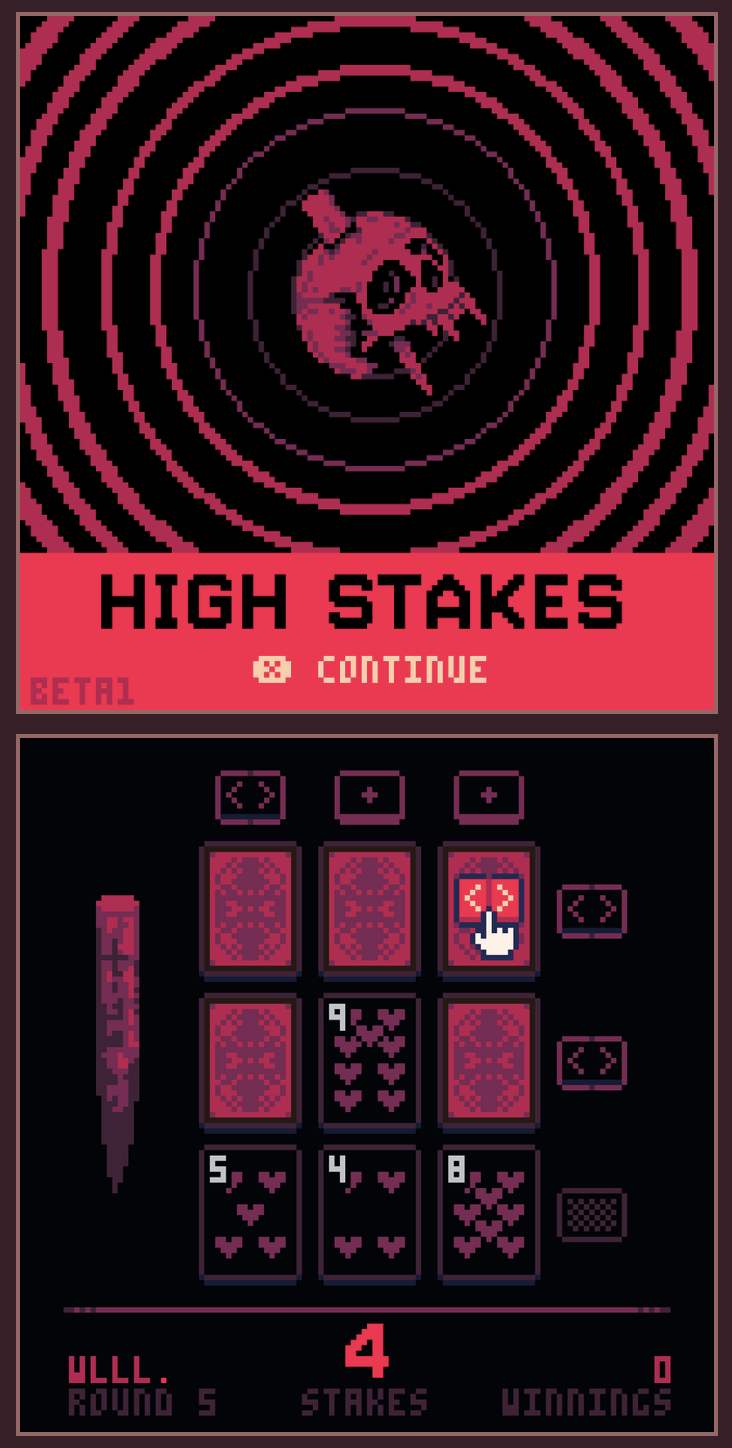
If you have not played it yet, High Stakes is a gambling card game where you play against multiple vampires to lose or win back your blood. Cards from 2 to 10 are arranged face down in a 3×3 grid, reminiscent of Card Thief and Card Crawl Adventure. The player’s task is to figure out which card is the vampire and either avoid it or, even better, stake it. The game uses an interesting clue mechanic where you unlock clue tokens to gain information once you uncover three cards vertically or horizontally. A full game is won once you regain your 5000 ml of blood. On different tables, the stakes scale up, and new vampires introduce increasingly difficult modifiers.
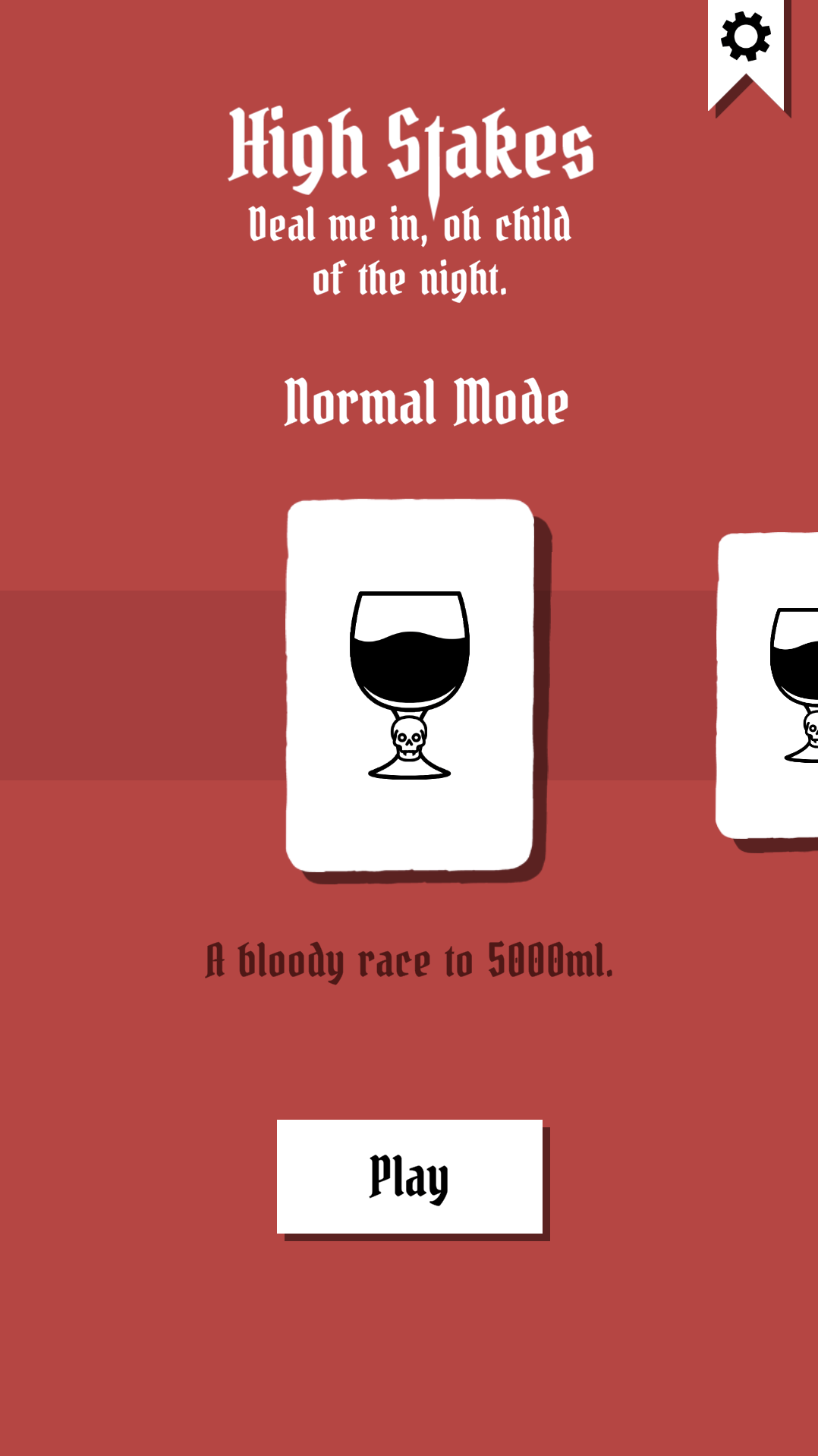
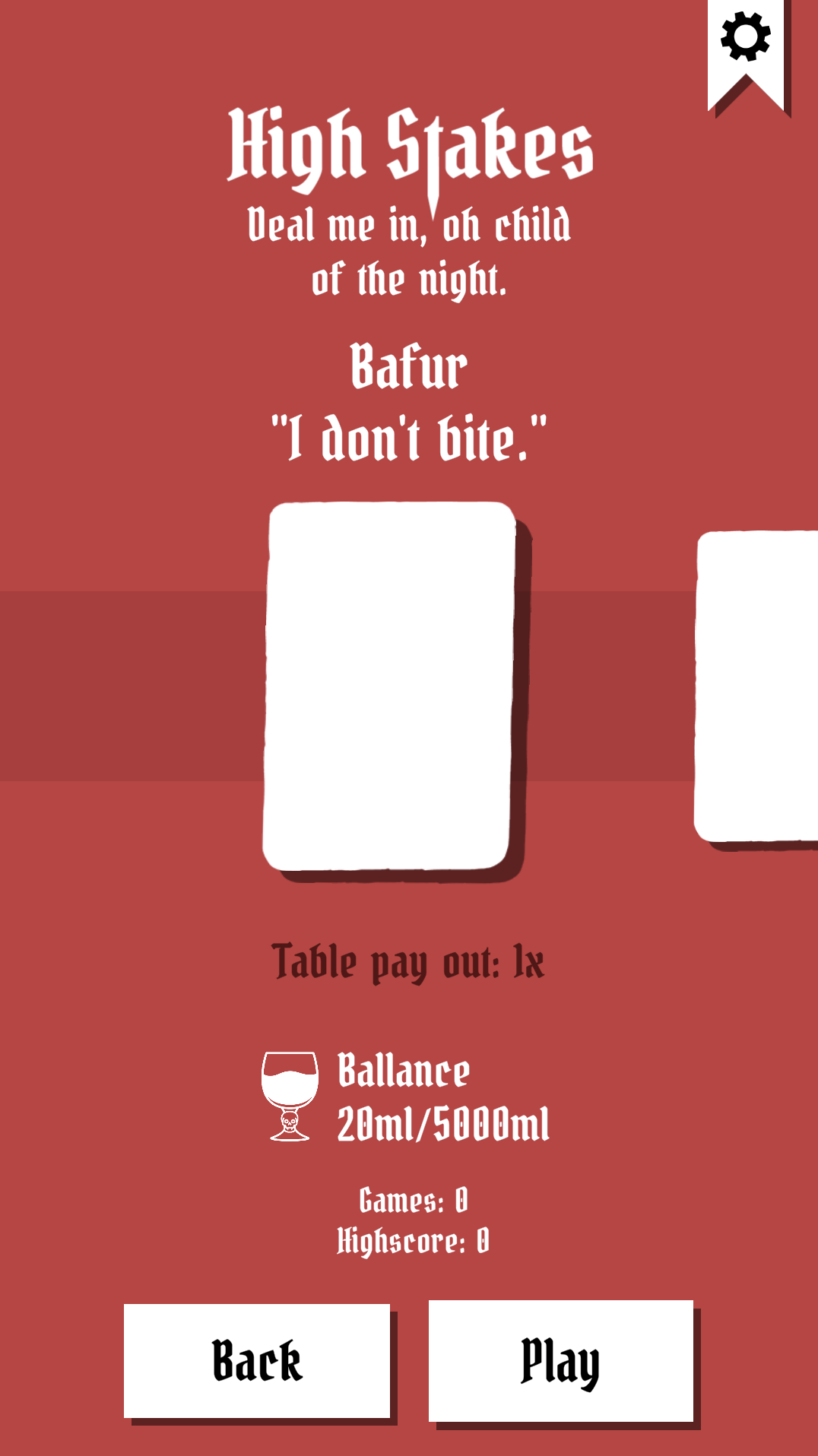
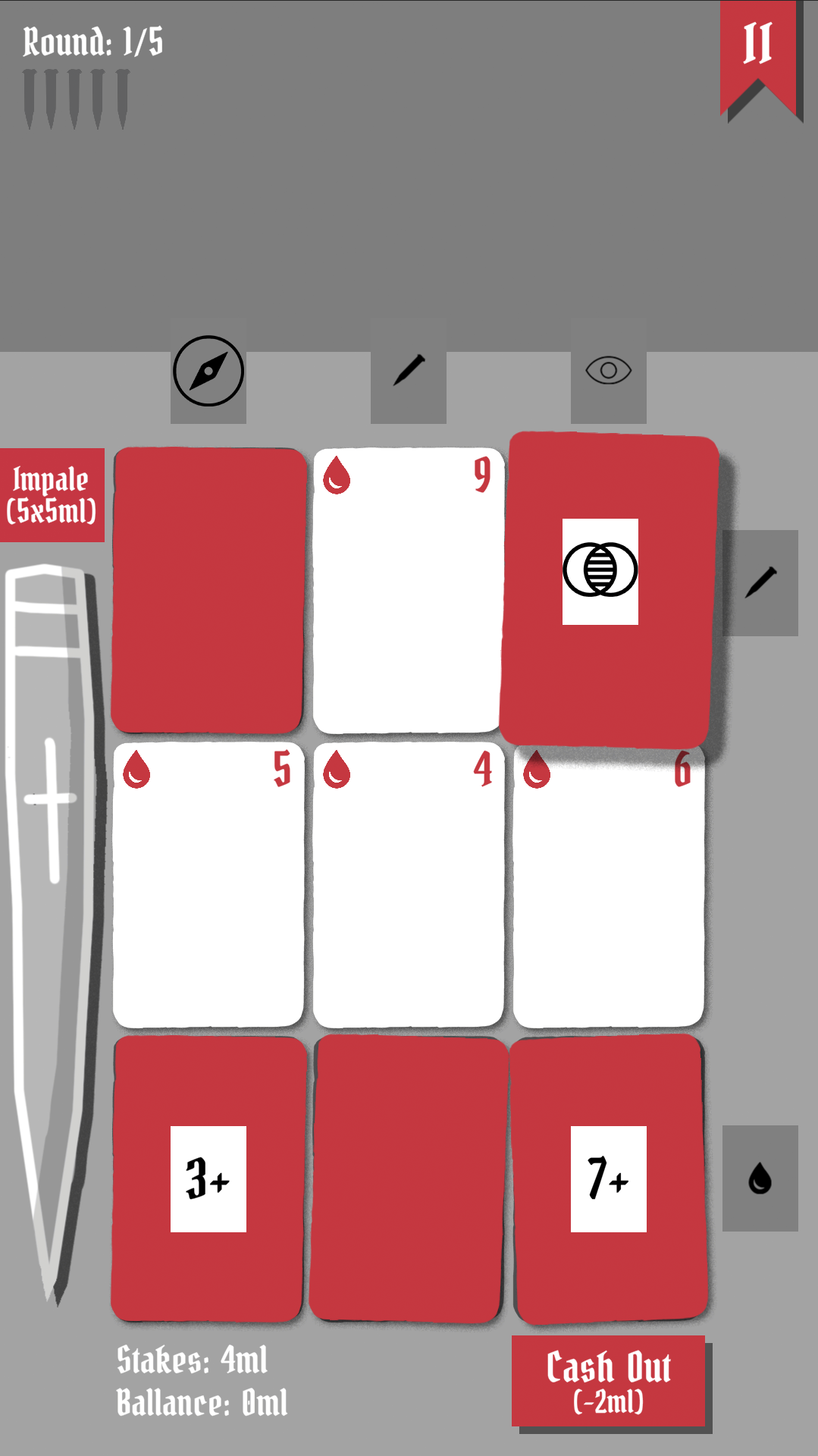
So far, I have ported the base design of the PICO-8 version to Unity, enhanced some mechanics, and designed new clue tokens that expand the gameplay. While we made good progress, Card Crawl 2 development took more time than expected, and the project is currently on hold. As soon as I have more free time, I plan to start a closed playtest, so keep an eye out.
Revenue
In terms of revenue, 2025 was fairly stable due to GUNCHO’s continued strong sales and a few additional feature placements on the App Store and Google Play.
Total revenue across all games and platforms was about 159,674 EUR in 2025, which equals 187,810 USD.
This is an increase of roughly 13 percent compared to 2024.
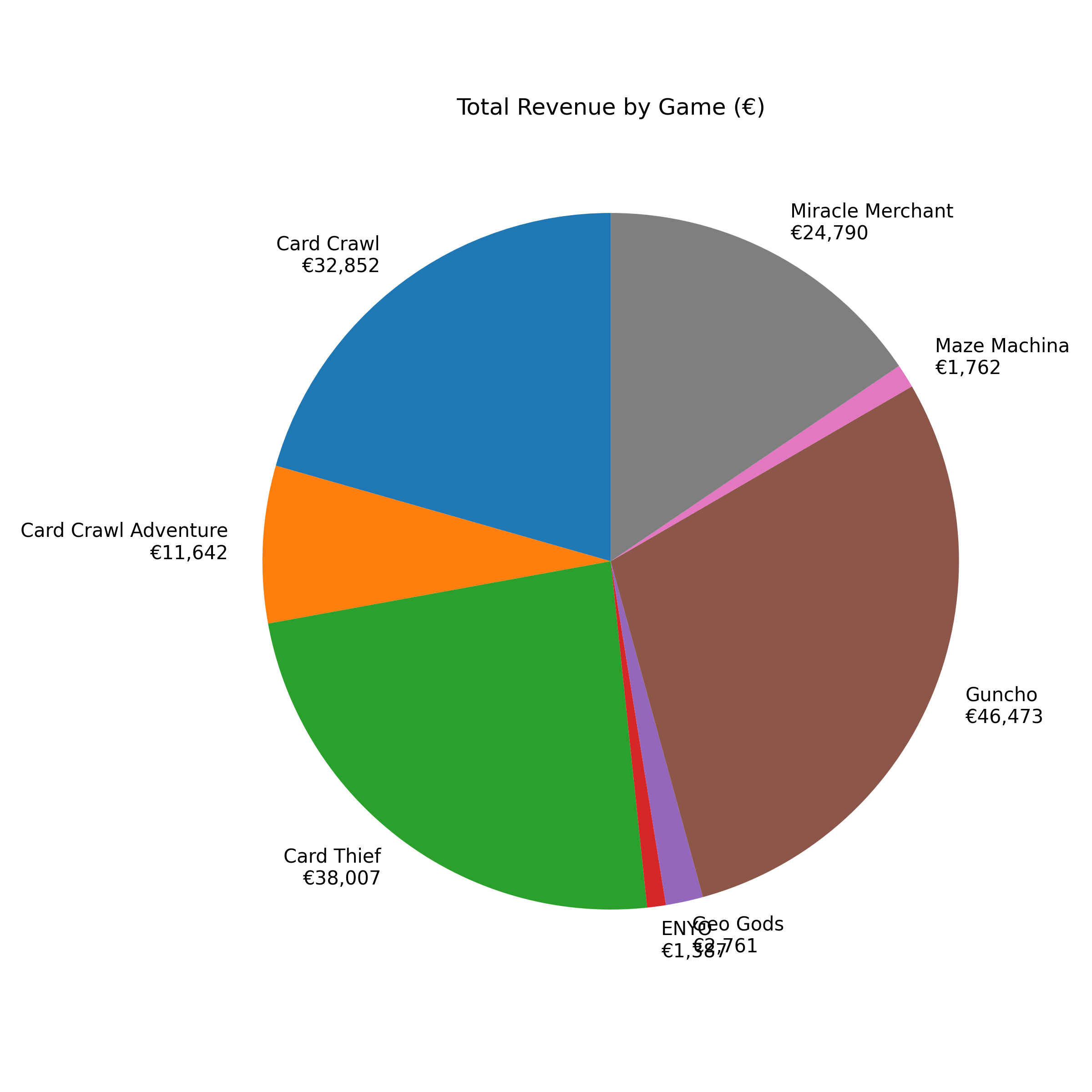
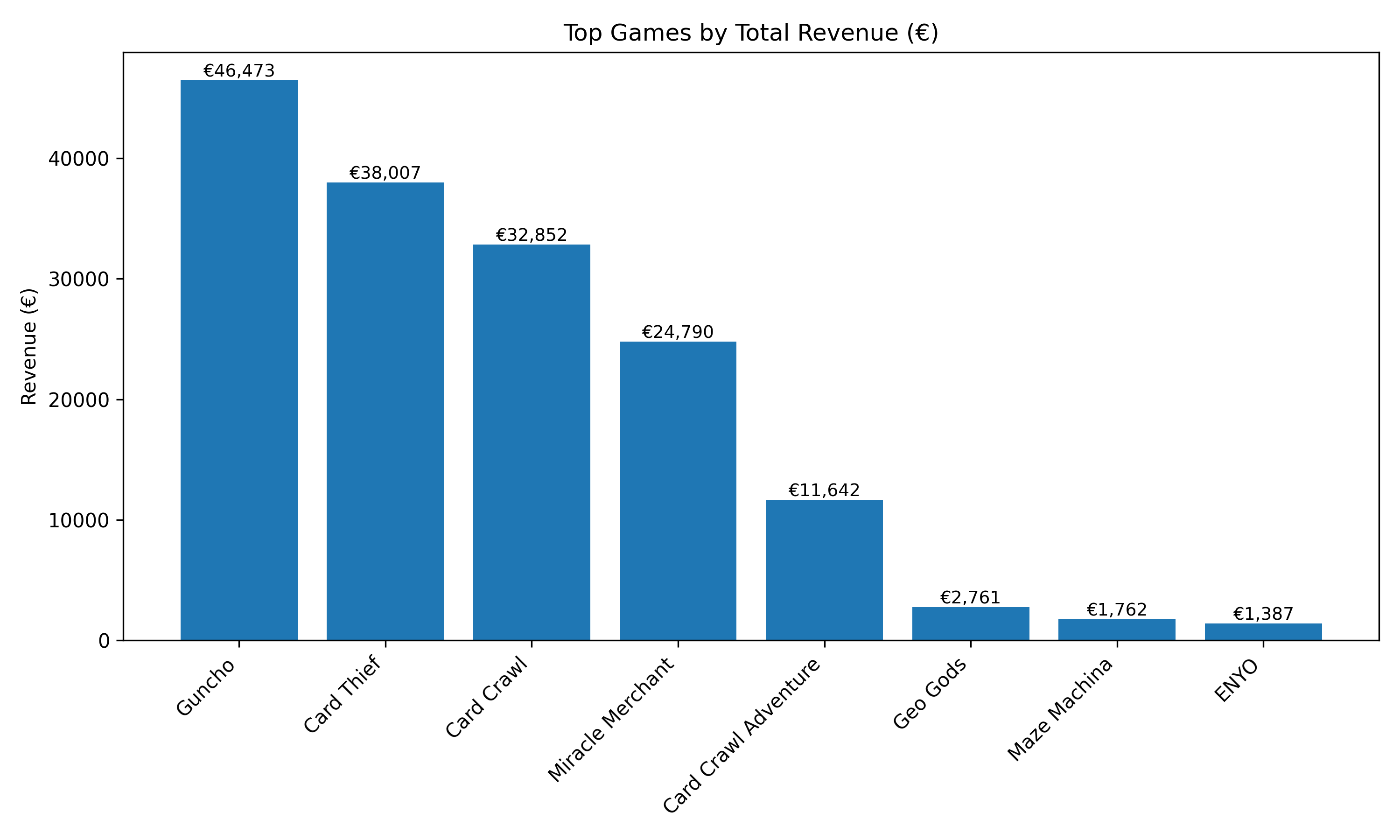
Revenue by game:
Guncho: 46,473 EUR
Card Thief: 38,007 EUR
Card Crawl: 32,852 EUR
Miracle Merchant: 24,790 EUR
Card Crawl Adventure: 11,642 EUR
Geo Gods: 2,761 EUR
Maze Machina: 1,762 EUR
ENYO: 1,387 EUR
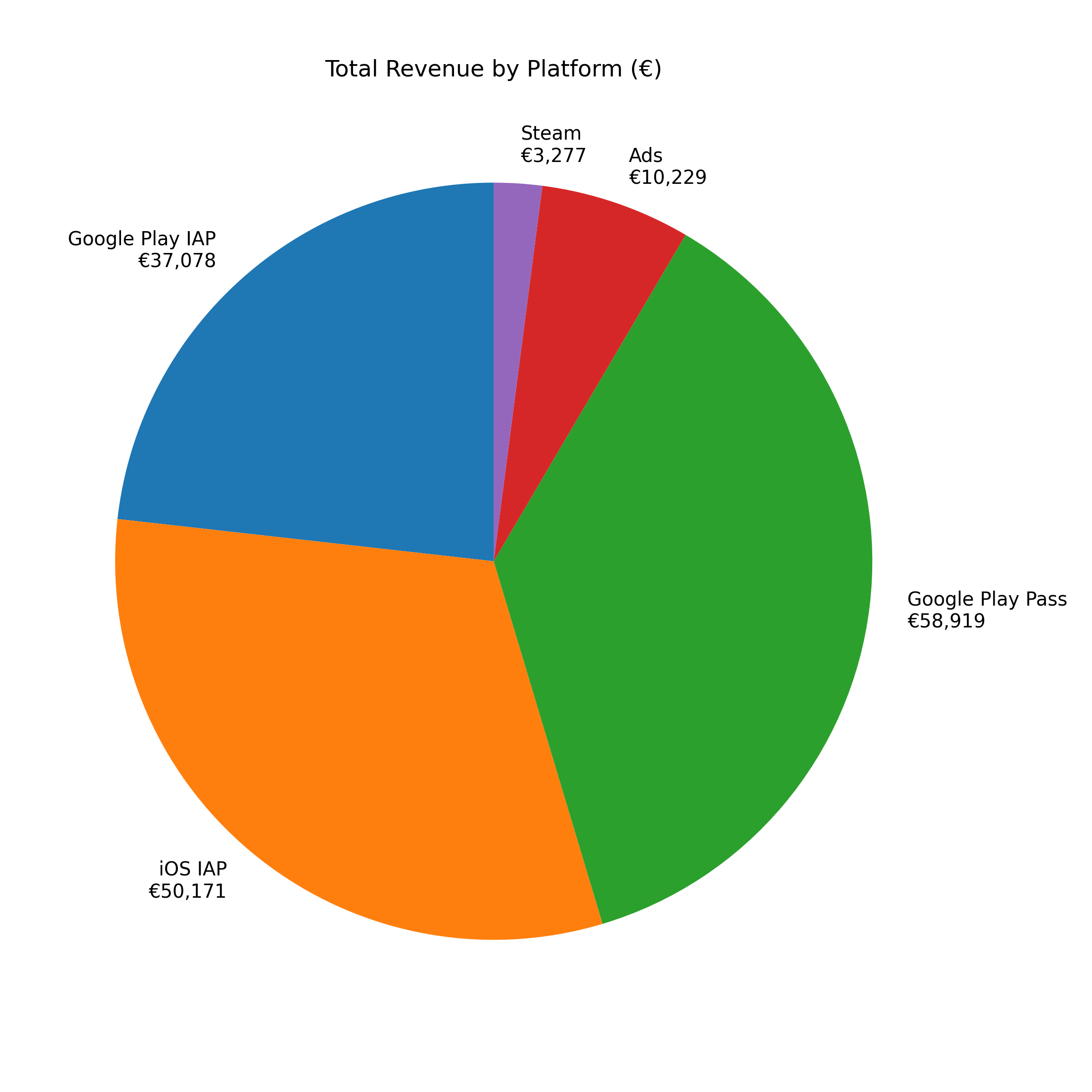
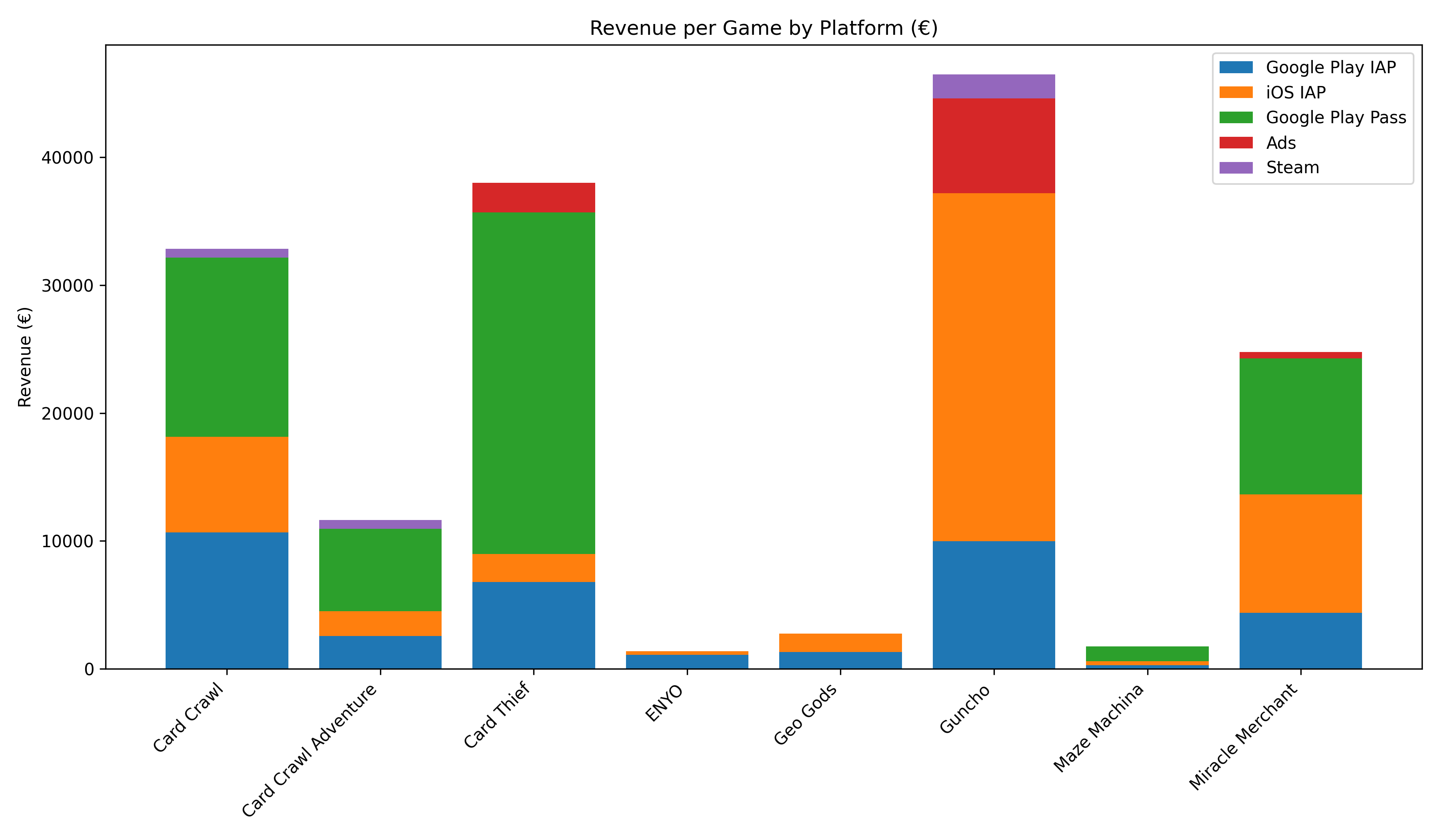
Revenue by income source:
Google Play Pass: 58,919 EUR
iOS IAP: 50,171 EUR
Google Play IAP: 37,078 EUR
Ads: 10,229 EUR
Steam: 3,277 EUR
Conclusion
2025 was a very productive year for me. Card Crawl 2 development went smoothly, and we are on track for an early 2026 release. I continued prototyping, explored Roblox as a completely new environment, and started another collaboration with Krystian, which I am very much looking forward to continuing. Revenue was up overall, which is always good, and GUNCHO continues to contribute a large portion of it.
Once again, thank you to everyone who bought my games, and a big shout-out to all my collaborators and my community for all the support this year.
I hope you all have a great 2026.
Best
Arnold